Double Opt-In Introduction Protocol for Investors and Founders
Asking both sides first before making an introduction protects everyone's time and reputation.

The first time someone forwarded my contact information to a venture investor without asking me first, I was the founder on the receiving end of a cold "warm" introduction. The investor was polite. The meeting happened. Nothing came of it, and I spent the better part of a week wondering whether I'd misread the relationship entirely. Later, I understood what had actually occurred: a connector had spent their credibility on my behalf without consulting the person whose time they were borrowing. That experience lodged something in me that years of watching introductions go well, and badly, have only reinforced.
The double opt-in introduction protocol is not complicated. Before any introduction email goes out, the connector asks both parties whether they want to be introduced. Both must say yes. Only then does the email go out. Fred Wilson articulated the term and the practice in 2009, and it spread quickly through venture circles until it became something close to a professional norm in Silicon Valley. The reason it spread so fast is worth sitting with: it sits at the exact intersection of the two most protected resources in venture capital, which are time and personal reputation. Any norm that protects both simultaneously will be adopted with unusual speed.
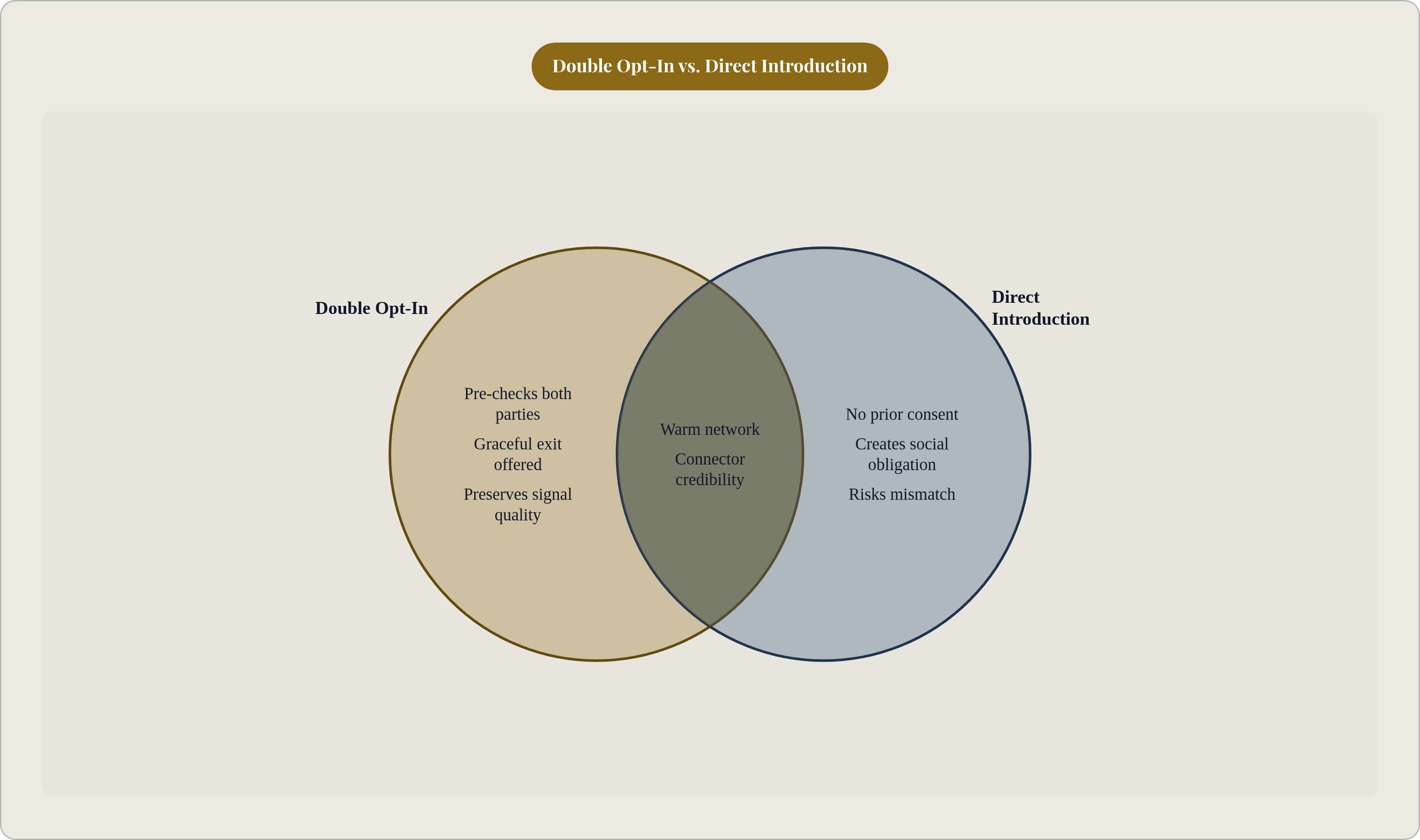
The mechanics, in practice, tilt slightly toward the recipient. The connector typically reaches out to the target first, asking whether they are open to meeting a particular founder and briefly explaining why the connection might be worthwhile, before looping in the founder at all. This sequencing matters. It means the investor gets a graceful exit before any social obligation has been created. Compare this to the direct introduction, where the connector emails both parties simultaneously without pre-checking with either. Adam Draper of Boost VC once argued publicly for the direct intro on efficiency grounds, suggesting that the friction of the opt-in check causes introductions to stall or never get written at all. He eventually shifted toward the double opt-in as his personal standard, reportedly after sustained pushback from investors who wanted the prior check. The efficiency argument is not without merit; friction is real. But it underestimates the cost of what gets eroded when the friction is removed.
Why Skipping the Opt-In Creates Problems for Everyone Involved
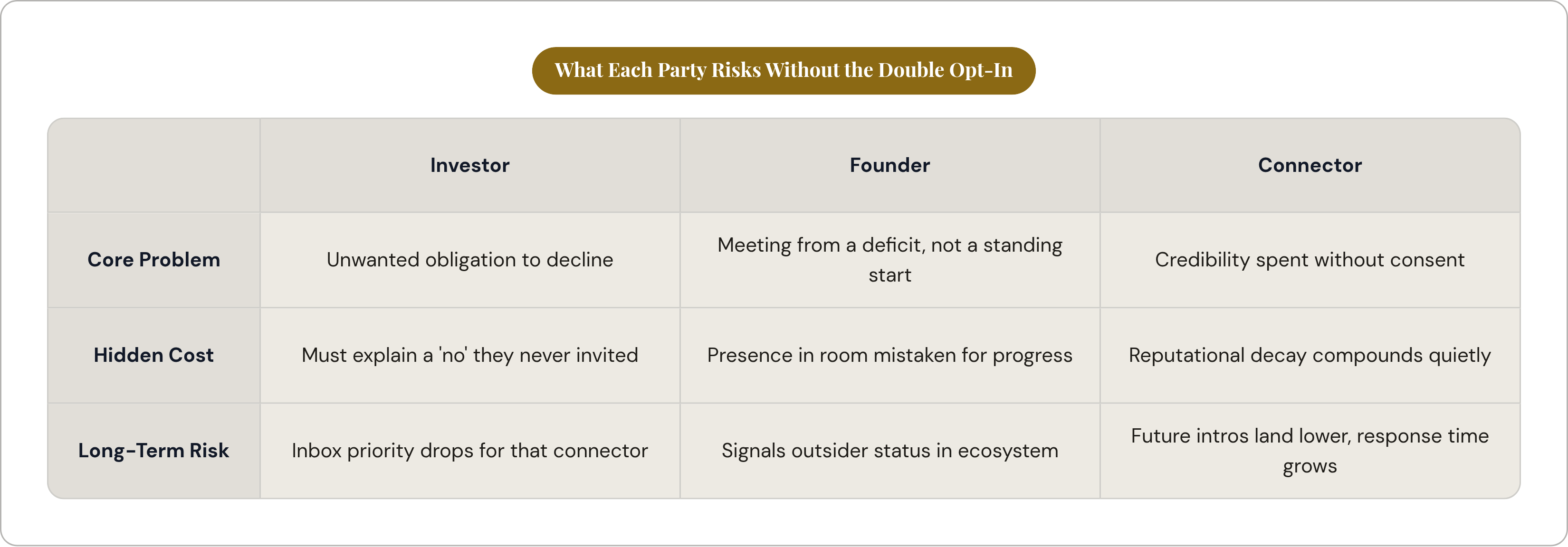
Consider what actually happens when an unrequested introduction lands in a VC's inbox. The investor now faces a choice they did not ask to make: go through the motions of a meeting they have no intention of funding, or decline someone they never chose to engage. Neither option is good. The first wastes time on both sides. The second requires the investor to deliver a rejection they shouldn't have had to deliver, to a founder who may not understand why the meeting felt hollow, for a sector or stage the investor doesn't even cover.
That last point matters more than it might appear. If an investor doesn't fund pre-seed rounds, or doesn't operate in your geography, or has already made a competing bet in your category, skipping the opt-in traps them in a social obligation to explain a "no" that should never have been created. The mismatch problem is not just a waste of time; it's an imposition.
The founder's situation is subtler but equally costly. Getting into a room through a forwarded email rather than a genuine opt-in means sitting across from someone who may not have read your context, doesn't understand why you're there, and is already calculating the fastest polite exit. You haven't started building a relationship; you've started at a deficit. Some founders mistake presence in the room for progress. It rarely is, when the entry was uninvited.
The connector's position is the most structurally exposed. Their reputation is the currency being spent every time an introduction goes out. A single unrequested intro can be forgiven as oversight. A pattern of them signals something more damaging: either ignorance of professional norms or poor judgment about fit, and sophisticated investors struggle to tell the difference. The practical consequence is that the connector's future introductions begin landing lower in the inbox. Reputational decay of this kind compounds quietly. It doesn't announce itself; it simply accumulates until the connector notices their emails are no longer getting same-day responses.
There is also a signaling dimension that founders, in particular, tend to underestimate. How you conduct the ask communicates something about your fluency with the ecosystem. A request that demonstrates awareness of the double opt-in signals that you understand how the game is played. A cold forward can read, uncharitably but not inaccurately, as the behavior of someone on the outside looking in.
Why Warm Introductions Carry So Much Weight in Deal Flow to Begin With
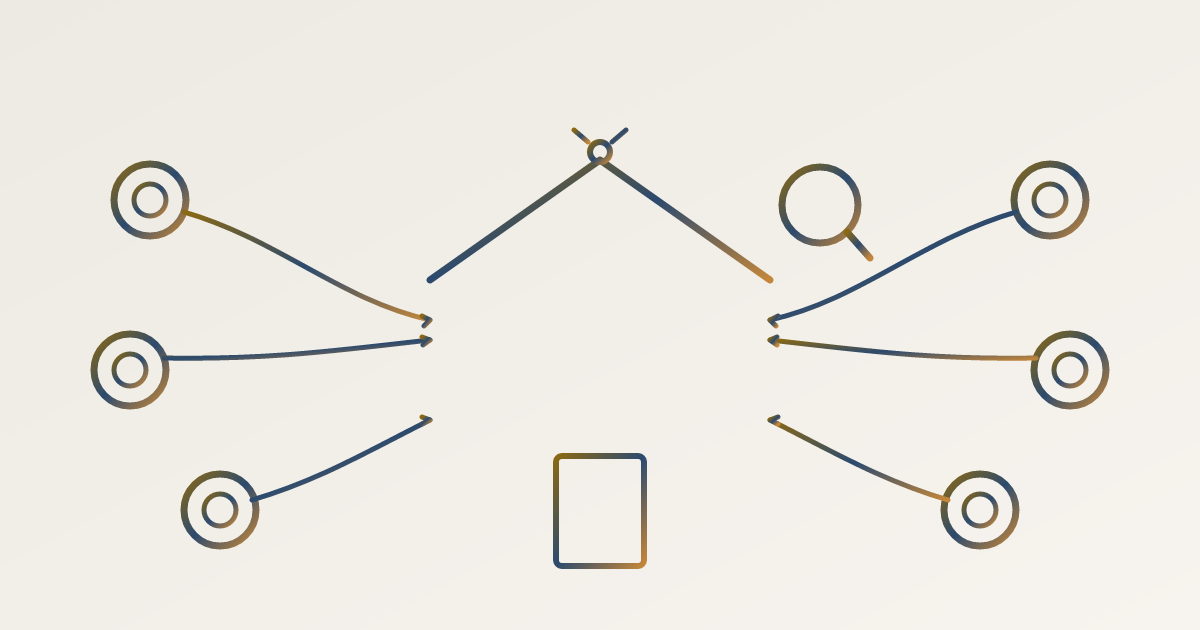
A Harvard Business Review analysis of nearly 900 venture capitalists found that the majority of all deals originate from within a firm's existing network. The double opt-in is not just etiquette; it is the mechanism through which that network gets activated responsibly. Sergio Monsalve, Founding Partner at Roble Ventures, has said that for the vast majority of his firm's deals, the firm either gets tipped off or directly referred by their network. These numbers are not anomalies. They reflect something structural about how venture capital makes decisions under uncertainty.
The reason introductions carry so much informational weight is that the source of the intro tells an investor nearly as much as the pitch itself. An introduction from an existing portfolio investor carries more signal than one from a second-degree LinkedIn connection, because the existing investor has capital at risk and their own reputation staked on the founder's trajectory. They are not just vouching; they are putting something on the line. That distinction in quality is not subtle to anyone who has been on the receiving end of both kinds of introductions.
VCs use the source of an introduction as a first-pass quality filter precisely because they cannot evaluate everything. The social capital economy embedded in warm introductions means the connector is not pitching the startup; they are pitching their own credibility. The founder's job is to make that vouching as easy and as confident as possible, because any hesitation or ambiguity in the connector's framing reflects on the founder before the meeting has even been scheduled.
Market pressure makes all of this more acute. Affinity's 2026 Predictions Report found that 50% of investors now cite sourcing new deals as their top priority, up from 42% the prior year, with competition from other firms cited as a significant constraint. In a market where the best deals are often spoken for before they're widely visible, the quality of a firm's introduction network and how efficiently that network activates is a competitive variable, not a courtesy.
How to Ask for an Introduction as a Founder
The single most important thing a founder can do when requesting an introduction is write the email the connector will send. Not a summary of what to say. Not a suggestion of points to hit. The actual email, ready to forward or paste. This is called a forwardable email, and the discipline of writing one forces the founder to do the intellectual work that should not fall to the connector.
That email should contain three things: one or two sentences on who you are and what the company does; a specific, evidence-based reason why this investor is the right person (their thesis, sector focus, or stage preference, not flattery); and a clear, low-friction ask. "Would it be okay if [connector] introduced us?" is sufficient. What it should not contain is a pitch deck, multiple attachments, or anything that turns the opt-in request into a pre-meeting. That is the meeting's job.
Founders also make a recurring error in how they manage the connector relationship itself. Asking for too many introductions at once from the same person cheapens each one. The connector's credibility is finite; spreading it across a dozen simultaneous asks signals that the founder is spraying, not targeting. Selectivity on your own end signals that you've done the fit analysis and believe this introduction is worth the connector's capital.
Research is not optional. Knowing whether an investor leads rounds at your stage, whether they have a competing portfolio company, and whether their recent investments align with your sector protects the connector's credibility and saves everyone the discomfort of a misaligned meeting. Doing that work before the ask is a form of respect for the person you're involving.
Give the connector an explicit out. Tell them directly that it is entirely fine if the fit isn't there. This lowers the social cost of declining and keeps the relationship intact regardless of outcome. Founders who omit this step sometimes create an obligation in the connector's mind that leads to a lukewarm introduction, which is, as we will see, worse than no introduction at all.
Timing the ask after a genuine exchange or shared context is almost always more effective than a cold request of the connector themselves. You are asking someone to spend their credibility; the better they know you and your judgment, the more confident that spend will be.
How to Handle the Introduction as the Connector
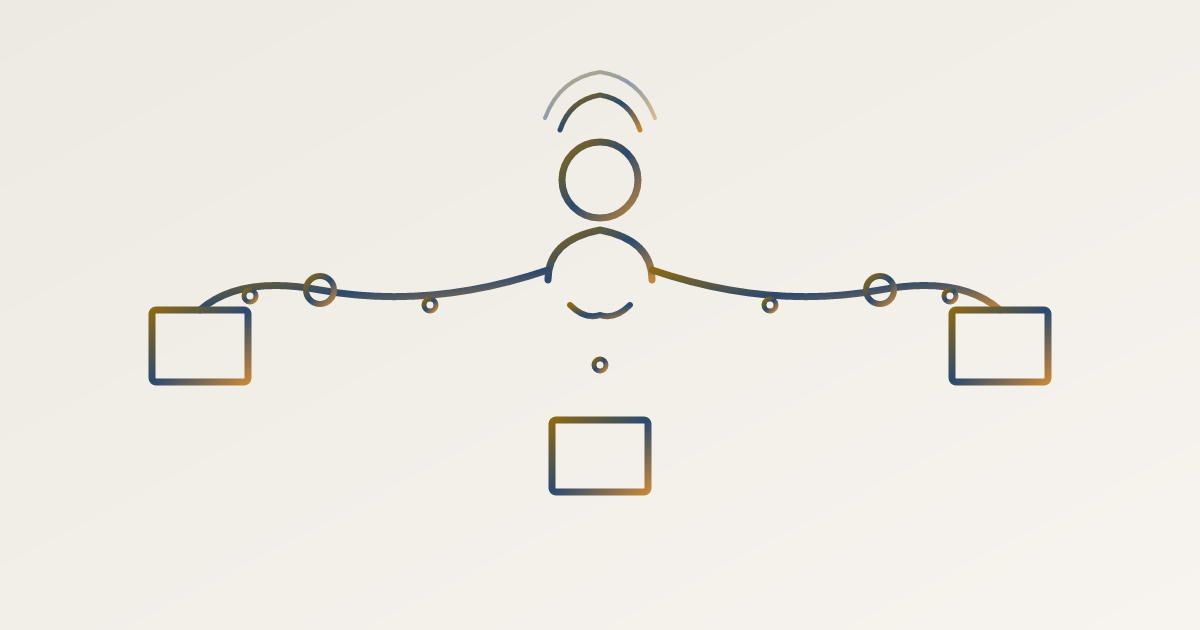
The connector's first move is always toward the investor, not the founder. Before the founder knows anything is in motion, the connector sends a brief, direct note: here is who this person is, here is why I thought of you specifically, here is what makes this timely, are you open to an introduction? That note has one structural job: to give the investor a graceful exit before any obligation exists. If it accomplishes that and nothing else, it has succeeded.
What that note also communicates, implicitly, is that the connector has done the matching work. A note that reads like a spray, vague on specifics, generic on fit, signals to the investor that the connector is not curating so much as forwarding. The most credible connectors I have observed write notes that are so specific about fit that the investor would have trouble saying no even if they tried. That specificity is earned, not improvised.
Once both parties have opted in, the introduction email itself should be brief, addressed to both parties simultaneously, with one strong sentence about each person and a clean handoff. Something like: "I'll leave it to you both from here." The connector then steps back. Following up to ask how the meeting went, or inserting themselves into the scheduling thread, undermines what the introduction was designed to accomplish. The handoff is a handoff.
Selectivity in choosing who to introduce is not rudeness; it is professional maintenance. A connector who makes introductions indiscriminately eventually loses the thing that made their introductions valuable, which is the investor's assumption that a recommendation from this person has been filtered. That assumption, once eroded, is slow to rebuild.
On the question of when to decline a founder's request: if you do not genuinely believe in the fit, or the founder, say so rather than making a lukewarm introduction. A lukewarm introduction is not a neutral act. It signals weak conviction to the investor, who then discounts not just the founder but the connector's future judgment. No introduction is often the kinder and smarter outcome.
How to Receive an Introduction Well, on Both Sides
For the founder, the standard is simple and frequently violated. Respond within 24 hours. Lead with brief, visible gratitude to the connector, who should be cc'd on the first response and then gracefully removed from the thread. Make the first move toward scheduling rather than leaving the ball in the investor's court. The opt-in the investor gave is not a commitment to invest; it is a willingness to engage. Slow follow-through after that willingness has been extended signals disorganization at the exact moment the founder most needs to signal the opposite.
The first response email is not the pitch. Its goal is a 30-minute call. Attaching a deck or lengthy materials on first response confuses the function of the email; it makes the investor do more work before you've established any relationship, and it can read as either over-eager or tone-deaf to how introductions are supposed to unfold. The call is for context. The deck is for after.
For the investor who opted in, a timely response is an obligation, not a courtesy. Ghosting after opting in is a specific kind of damage: it does not just waste the founder's time, it costs the connector credibility for the next introduction they try to make. If circumstances have changed and the meeting no longer makes sense, a brief, honest note to the connector is both adequate and appreciated. Silence is not.
Both sides should thank the connector after the meeting, whether the outcome is positive or not. This step is skipped more often than it should be, and its omission is noticed. The connector's willingness to make the next introduction is not disconnected from whether they heard anything after the last one.
Why the Protocol Breaks Down in Practice and How Firms Can Fix It Systematically
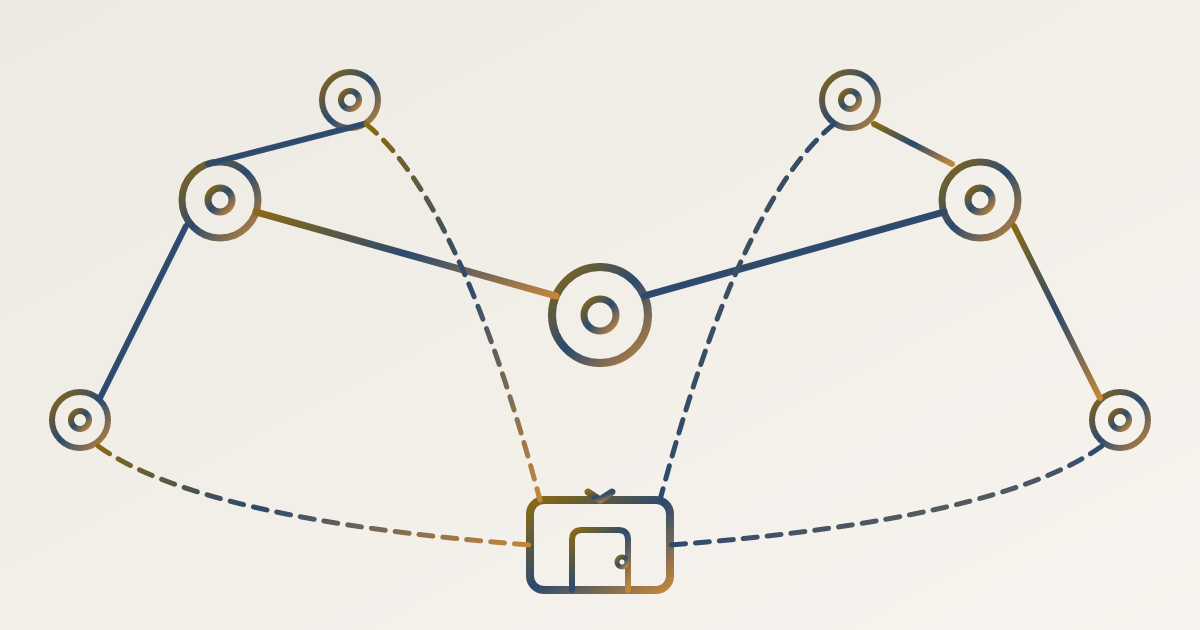
Even when everyone involved understands the double opt-in protocol, it fails at the organizational level. The core failure mode is structural: relationship data lives in individual inboxes rather than shared systems. One partner may have a warm path to a founder or LP that another partner in the same firm is currently cold-emailing. Neither knows. The firm's network is not siloed by design; it is siloed by default, because no one built the infrastructure to surface it.
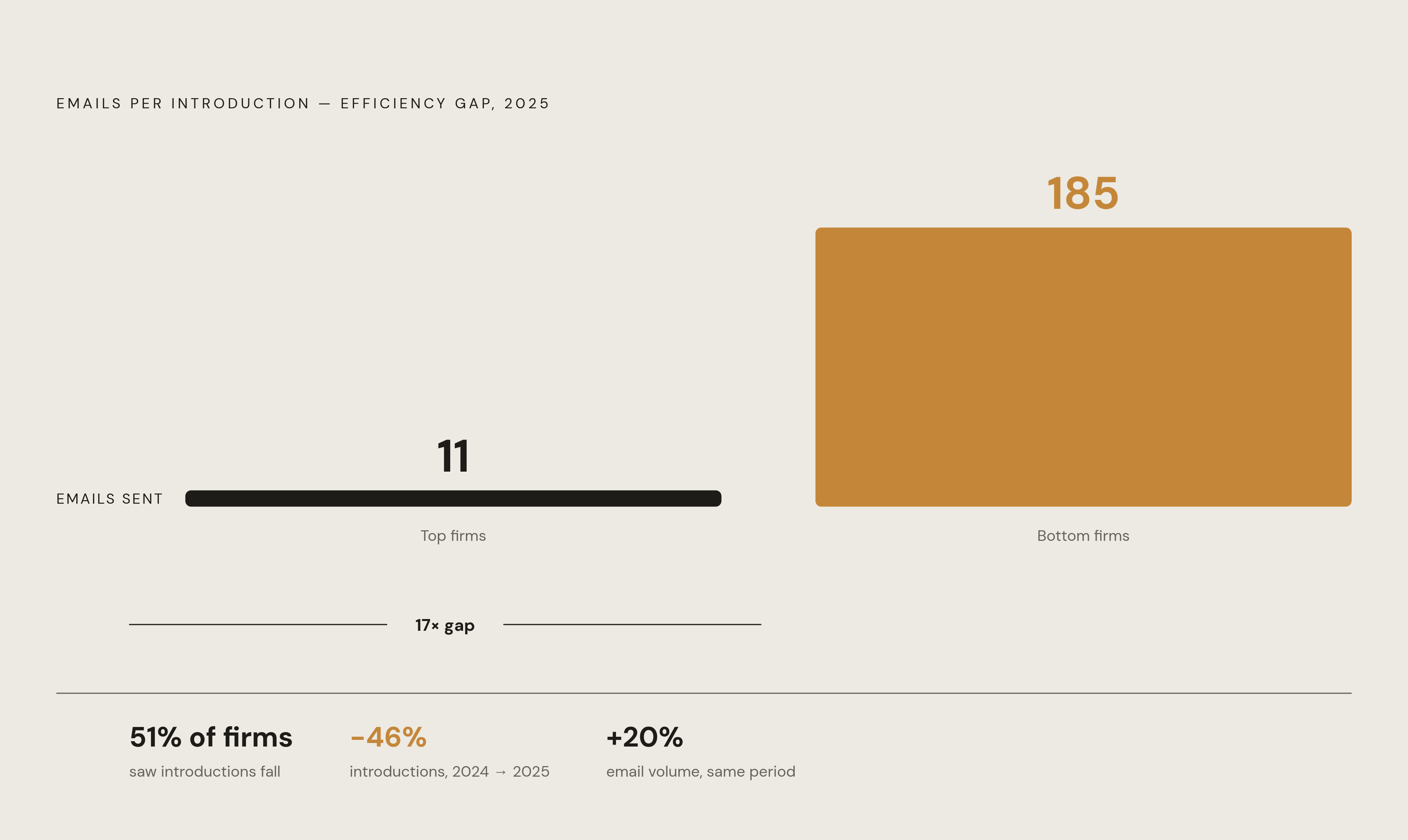
The efficiency consequences of this siloing are measurable. Affinity's Invisible Edge report, which analyzed 291 private equity firms over two years, found that the most efficient firms generated one introduction for every 11 emails sent; the least efficient needed 185 emails to achieve the same result. That is a 17-fold gap in outreach-to-introduction efficiency between firms operating in the same market, often targeting the same deals.
The gap is widening rather than closing. The same report found that 51% of firms saw their introduction output decline by 46% from 2024 to 2025, even as they increased email volume by 20%. More activity, less result. The instinct to do more is understandable; the data suggests it is precisely wrong.
What gets lost in siloed networks is specific and recoverable. Firms lose visibility into who their colleagues have met and how recently, which relationships are warm versus cold at this moment, and whether someone inside the firm already has the path they are trying to build from scratch. The institutional memory problem compounds when relationship knowledge lives only in individuals, because that knowledge creates bottlenecks and it leaves with the person when they leave the firm.
Top-performing firms made 16% more introductions year over year in 2024 than their peers, not by sending more cold outreach, but by better activating the relationships they already had. The fix, in other words, is visibility rather than volume.
AI-assisted tools can accelerate this by surfacing which person inside a firm is best positioned to make a given introduction, drafting the opt-in ask, and tracking whether follow-through actually happened. But the judgment call on whether to make the introduction stays with the professional. The protocol is not a workflow; it is a series of human credibility decisions. The tools that serve it best are the ones that support that judgment without attempting to replace it.
What I keep returning to, after years of watching this play out from different positions in the network, is that the double opt-in protocol is not primarily about politeness. It is about information efficiency and the preservation of signal quality. Every unsolicited introduction degrades the signal value of the next one. Every opt-in check preserves it. The firms and individuals who understand this at a systemic level, rather than treating each introduction as an isolated transaction, are the ones whose networks compound over time rather than decay.