Data Anonymization Meaning in CRM Pipeline Contexts
Compliance now hinges on assessing re-identification risk for each data recipient separately.
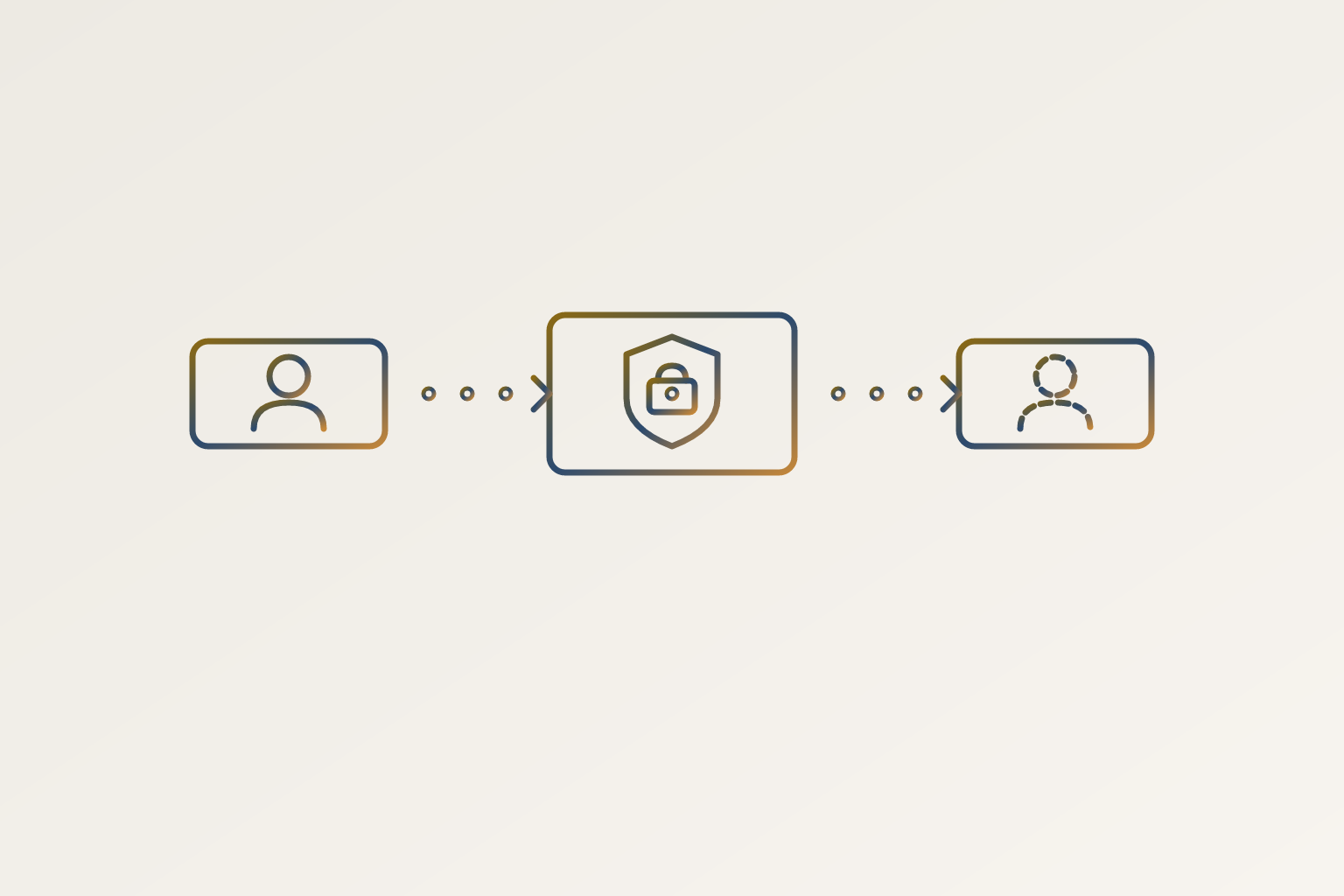
Data anonymization in CRM pipelines requires judging whether people can realistically be identified. The EDPB’s 2026 framework makes that judgment depend on the data, its recipients, and their means of re-identification. For relationship intelligence, the consequence is architectural. Compliance depends on how firms collect, share, and keep context as well as what they mask before export.
What data anonymization actually means under the EDPB's 2026 likelihood test
The EDPB’s Guidelines 02/2026, adopted as a draft on July 7, 2026, set a likelihood test for when data leaves the scope of the GDPR. They replace the thinking behind the 2014 Article 29 Working Party opinion with a contextual assessment of identification risk. Data is anonymous only when the realistic chance of identifying someone is insignificant. The standard concerns “means reasonably likely to be used”, rather than every conceivable means of identification.
The EDPB tests anonymity against three criteria, namely no record isolation, no linkage, and no inference. No record isolation means that a unique combination of attributes cannot single out one individual. No linkage means that records cannot be matched to information about the same person held elsewhere. No inference means that the data cannot support a specific and meaningful inference about an identified or identifiable person. All three criteria must hold for each party who might access the data, including the party that anonymized it.
The guidelines remained in public consultation as of the source’s publication date, so the framework is directionally settled while implementation details remain unresolved. In particular, the boundary between a realistic identification risk and an insignificant one still requires contextual judgment. Under the EDPB framework, anonymity is relative to context. The same dataset can be anonymous for a recipient with limited means and remain personal data for another with extra information or the ability to re-identify it.
Why removing names and masking IPs is not enough for relationship data
Removing names, email addresses, and IP addresses changes a record, but someone may still be identifiable from it. The EDPB framework illustrates this through combinations of browser type, operating system, screen resolution, and time zone that can isolate one person. None of those fields needs to contain a name for their combination to become distinctive. As a record gains attributes, the chance that its particular combination is unique increases.
Relationship data makes this problem especially difficult because its usefulness comes from contextual richness. Even without a name, a calendar record can have meeting frequency, counterparty seniority signals, and topic patterns that together single out someone. An email thread with its addresses removed can still have communication style, deal context, and timing that allow linkage across datasets. Meeting notes and conversational transcripts add context beyond what is in the contact fields.
These mechanisms expose the limits of masking against all three criteria. A distinctive pattern can isolate a person, an overlapping record can link that pattern to an identity, and the associated conversation can reveal something meaningful about them. A dataset may fail these tests even after every cookie or IP address has been removed. The risk also extends beyond the original material when personal information propagates into AI prompts, summaries, and downstream outputs. Late-stage anonymization of conversational logs cannot reliably contain information that has already moved into those forms.
Where CRM pipeline architecture creates anonymization failure points
At ingestion, structured contact records meet unstructured calls, emails, and meeting notes. The combined record carries more attributes than either source alone, widening the possibilities for isolation. Even after surface identifiers are removed, the mix of contact details and conversational context may still stand out. This is why the compliance gap is often widest where relationship intelligence is richest. Enrichment in the pipeline creates this risk even when no existing identifying field is passed on.
Enriched records can also fail the tests when they move downstream for analytics or AI training. A reporting or training recipient may hold a second dataset that makes linkage possible, even though the originating system treated the records as anonymized. Processing can also precede the safeguards that procurement teams believe govern the service. A firm may approve its main AI meeting vendor without auditing the transcription engine or diarization model that works as a subprocessor under its own, less restrictive terms. Personal data then passes through those subprocessors before anonymization is applied.
Retention creates a different exposure by keeping conversational logs alive beyond their purpose-limitation window. The event that justified collecting the conversation may be over, but the record can still support identification or linkage. Redacting a summary afterward does not undo the passage of personal information through prompts and downstream outputs. In 2026, firms face 20 US state privacy laws and maturing GDPR enforcement without a federal standard to simplify the US landscape, so a pipeline acceptable in one jurisdiction may fail in another.
How the relative-anonymity principle changes the risk calculus when data crosses firm boundaries
Sharing changes the assessment because it changes the knowledge available to interpret the data. A firm may treat a dataset as anonymous internally, yet send it to a recipient who already knows part of the relationship network. That additional context can make the records personal data for the recipient even if the transferred dataset contains exactly the same fields.
Relationship graphs make this more than a theoretical possibility. A shared network intelligence layer transmits structural signals about who connects to whom, how frequently, and at what seniority level, even if it strips names. Someone in the network may recognize those patterns because they know the relationships being described. The graph’s useful structure is also a means of interpreting it. An “anonymize and share” strategy is therefore especially vulnerable when recipients are the people best placed to understand its context.
A model trained on anonymized relationship graphs can surface information about specific individuals when queried by someone with partial knowledge. Passing isolation and linkage checks on stored data would not resolve that separate failure of the no-inference criterion. Cross-team and cross-fund sharing must consequently be assessed in terms of what each recipient can reasonably learn. Every intended recipient requires a separate anonymization assessment.
Why traditional CRM architecture makes contextual anonymization assessments nearly impossible to run
A per-recipient assessment requires an account of what each record contains, where it has traveled, and who can receive it. Traditional CRM architecture relies on manual entry and governed contact fields, leaving much unstructured context in attachments, notes, and linked transcripts and limiting the lineage it can provide. Those materials can hold combinations that identify someone even when the system does not track them at the field level.
Manual upkeep compounds the gap because an out-of-date CRM cannot supply a complete lineage record. When enriched contact records merge with conversational logs, the combined object has more attributes than either source alone. Yet logging the result as a single object loses the provenance needed to understand how its parts could link to a recipient’s other data. A record of the object’s existence is not a record of its identification risk.
This creates a mismatch between the granularity of the legal judgment and the granularity of the system’s knowledge. The assessment concerns attributes, combinations, origins, and recipients, while the CRM may expose only a contact object and its associated materials. In 2026, GDPR breach notifications already run at hundreds per day, and regulators are taking aim more often at AI, adtech, and cross-border data transfers.
What compliant relationship intelligence infrastructure actually requires
The framework implies three properties without prescribing a particular implementation, namely purpose-limitation at ingestion, permission-aware retrieval, and per-recipient anonymization assessment. Automated data lineage connects those properties by making the necessary contextual assessment possible. Purpose-limitation begins with a clear reason to collect each data type and restricts collection to the minimum dataset needed. It rules out keeping large amounts of conversation in the hope that something useful will turn up later. The purpose determines the collection boundary.
For conversational data, that boundary means recording only what the retention policy explicitly requires and tagging each artifact with its data classification when it is created. Raw conversational artifacts should not remain stored after derived summaries are generated. Relationship systems also need to tell connection-strength signals apart from the conversational content they came from. A system may be able to keep a useful signal without keeping the source conversation. This distinction preserves relationship utility while minimizing the richer content that carries greater re-identification risk.
Permission-aware retrieval gives AI agents and query layers only the access rights of the person making the request. Tenant-partitioned storage and identity-centered access control let a team use institutional relationship signals while keeping personal relationship context private. Rolo describes its approach as turning scattered institutional relationships into “one permissioned intelligence layer” and connects conversations, meetings, contacts, and public context. That is a concrete example of the architectural direction. Access control limits who can see the data, but it still needs to pass the contextual test.
A firm-wide relationship graph can show warm paths and rank connections by how relevant and recent they are while keeping raw conversational content from recipients who lack access rights. The design aims to prevent opportunities for isolation, linkage, and inference rather than remove identifying information only after it has spread. Nevertheless, the EDPB’s refusal to guarantee any setup means that architecture cannot substitute for assessment. Changes in recipients, attribute richness, or available external datasets can change the result. By making anonymization a continuous contextual judgment, the framework effectively makes permissioned-by-design infrastructure necessary.
The practical steps firms can take now, before the guidelines are finalized
The consultation leaves implementation questions open, but it does not prevent firms from acting on the three-criteria framework. The first task is to audit the attribute richness of every record type in the CRM pipeline. That audit must go beyond named identifiers to examine combinations of seniority, meeting frequency, deal stage, and communication recency. Its purpose is to identify where ordinary attributes together could isolate a person. This gives the firm a more useful starting point than an inventory of fields marked as personal information.
The next task is to map every recipient, including internal analytics teams, AI training pipelines, partner firms, and subprocessors. For each recipient, the no-linkage assessment must examine whether they hold or can access another dataset that could match the records. Redaction and data minimization must then occur before enriched data enters an AI summary or analytics engine. This sequence addresses propagation into prompts, outputs, and shared models at its source. It also makes both the timing and presence of a safeguard part of the assessment.
Finally, firms can replace one-time anonymization certification with continuous review triggered by changes in recipients, enriched attributes, or newly available external datasets. Firms that build access controls, minimization, and recipient assessment into their infrastructure will be better positioned when final guidance arrives. The EDPB framework starts a regulatory cycle that will ask more of firms and has yet to run its course. Treating anonymization as a continuous discipline is the foundation for keeping relationship intelligence pipelines useful and compliant at full capacity.
Sources
- Guidelines 02/2026 on Anonymisation Version 1.0 Adopted on 07 July 2026
- Schrödinger's Data? A practical guide to the EDPB’s new anonymisation guidelines
- The EDPB's draft anonymization guidelines: What they mean for your data strategy
- Anonymity is in the eye of the beholder key takeaways from the EDPBs new anonymisation guidelines - Bird & Bird
- Anonymous or not? The EDPB's new draft guidelines on anonymisation
- The EDPB's guidelines on anonymisation: one legal standard, two approaches, three criteria
- EDPB Publishes Draft Guidelines on Anonymisation
- An Algorithmic Pipeline for GDPR-Compliant Healthcare Data Anonymisation: Moving Toward Standardisation