Vendor Access to Professional Communication Data in SaaS AI Tools
Four data-access layers matter more than the training-policy question alone.
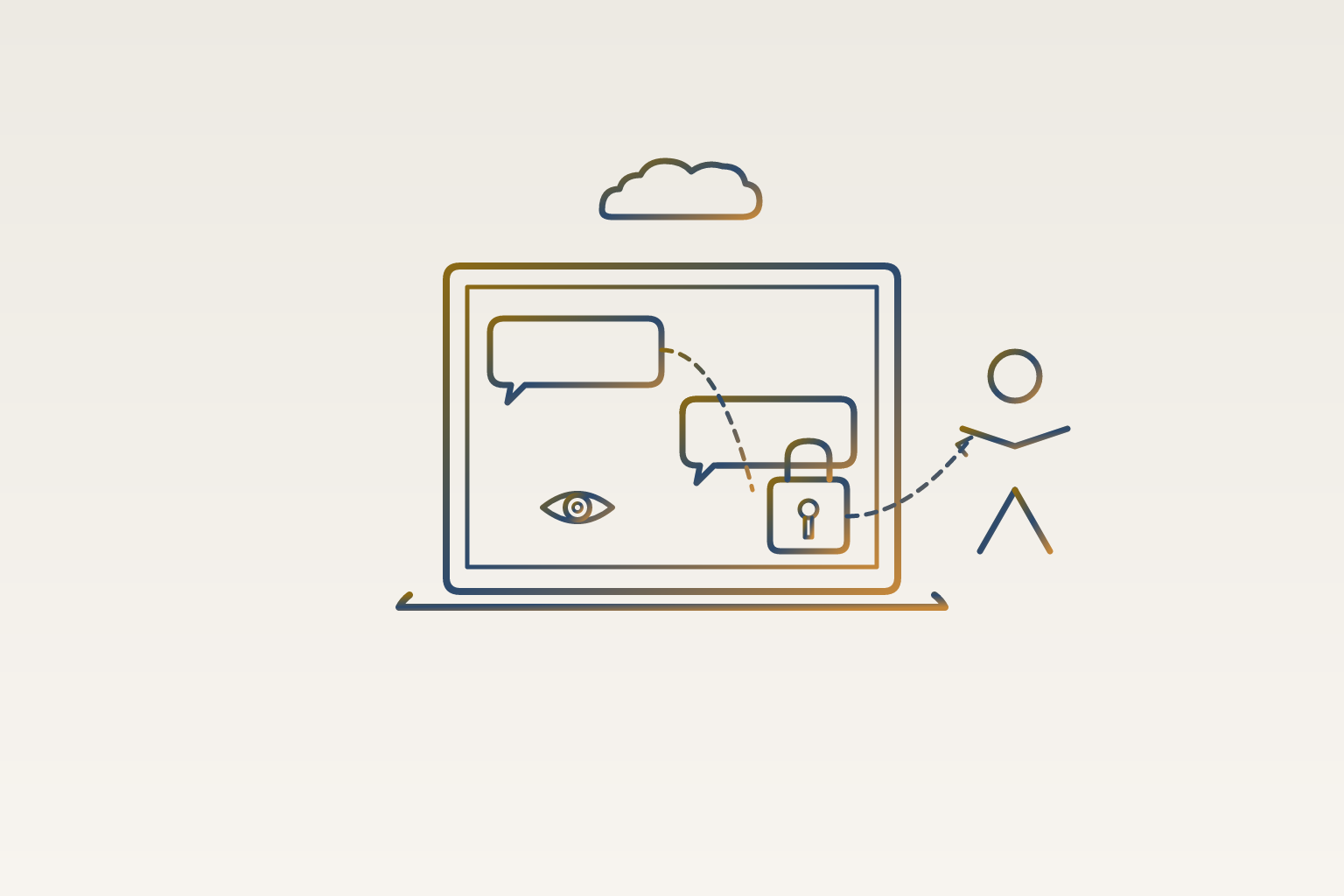
Connecting email, calendar, and messaging data to an AI tool triggers four separate questions about vendor access, not one. Most professionals ask only whether the tool trains on their data, get a reassuring "no," and stop there. That answer covers exactly one of four layers that determine what actually happens to a deal thread, a board discussion, or a limited partner's email once it enters a vendor's pipeline. Retention windows, human review rights, and sub-processor chains keep operating regardless of the training policy, and the training question, the one everybody asks, is only one of four layers that matter.
Here's why that ranking matters. A calendar entry can name a term sheet negotiation. An email thread can reveal an LP relationship or a pending acquisition target. This isn't an abstract scare story about AI risk, it's a literacy problem: the professionals who understand all four layers can make fast, defensible calls about which tools to connect. The ones who stop at "do you train on my data" are making that decision on the one axis vendors have gotten good at reassuring people about, while leaving the other three completely unexamined.
How the consumer/business tier line governs training defaults across major providers
A pattern holds across nearly every major AI vendor: the consumer tier trains on user data by default, and the business or enterprise tier excludes that data by default, usually as a contractual guarantee rather than a toggle buried in settings. The model underneath might be identical. Windsurf offers a training opt-out in consumer settings, but its Teams and Enterprise tiers exclude training contractually, which is a meaningfully different guarantee than a checkbox a user could forget to click. Perplexity, Grok, and DeepSeek don't have a documented enterprise-grade opt-out confirmed in current policy, and that matters if someone is routing sensitive research or drafts through any of them.
So the practical result: two people at the same firm, using the same underlying model, can have completely different data exposure depending solely on which account tier they signed up under. A banker who connects a personal webmail account to a consumer-tier AI assistant isn't covered by whatever data protection agreement the firm negotiated for its enterprise seats. That's the exact shape shadow IT takes. Someone finds a tool that's useful, signs up with a personal email because procurement takes six weeks, and starts pasting in work content. The gap isn't malice, it's speed outrunning process, and treating it as a training-policy failure misses the point: the account tier was wrong before a single document got uploaded.
One detail gets missed constantly: opt-outs are forward-looking only. Toggling "don't train on my data" today doesn't retroactively remove anything already ingested. Whatever was fed in before the switch was flipped stays wherever it landed in the training corpus, and current agreements commonly lack any contractual mechanism that claws it back out. Policies have also flipped multiple times across the industry, so an opt-out configured in early 2025 might not describe a vendor's current practice by the time anyone reads this. A training policy needs a re-check at every contract renewal. Assuming it hasn't changed is the mistake, and it's the single most common one on this list.
Retention windows and human review rights: what "secure" tools still permit
Training is one axis. Retention is a separate one entirely, and vendors tend to specify separate windows for inputs, outputs, and metadata, three numbers that rarely surface during onboarding and almost never get read even when published. A tool might discard raw inputs after 30 days but keep derived metadata, usage logs, or embeddings indefinitely. Nobody explains that distinction at signup, and most buyers never ask, which means the 30-day figure gets quoted back as the whole answer when it's a third of it.
Regulation has started to set a floor here. The EU AI Act imposes retention and logging obligations on providers of high-risk AI systems, though plenty of enterprise contracts specify windows well beyond any regulatory minimum. The floor isn't the ceiling. Worth checking which one a given vendor is actually offering before assuming the stricter number applies.
Human review is the part that survives even a strict no-training policy completely intact, and it's the piece most buyers forget to ask about. Most vendor privacy policies carve out an exception letting employees review user data for safety, abuse detection, or model quality purposes, and that carve-out applies whether or not training is switched on. In practice this means trust and safety teams auditing flagged conversations, quality reviewers spot-checking outputs, sometimes contractors under NDA sampling real user data to grade model performance. None of that requires training to be enabled. All of it means a human being, somewhere, might read the content, and no training opt-out was ever going to stop that.
For a calendar entry describing a term sheet negotiation, or an email thread with a limited partner, this is the part of the pipeline that matters most, because the content sits inside that review window unless the contract says otherwise in writing. Generic language like "we take security seriously" doesn't restrict anything. What restricts it is specific contractual language limiting who can access customer data and under what conditions. If a vendor can't produce that language on request, assume the review right is still wide open, and price the tool accordingly.
Sub-processor chains: where data travels after it leaves the primary vendor
No SaaS AI vendor operates alone. Behind the primary product sits a chain of sub-processors: cloud infrastructure providers, the model API vendor if it's different from the front-end company, annotation contractors, monitoring and logging services. Each one that touches personal data belonging to EU residents needs a binding data processing agreement, a DPA, either standalone or built from Standard Contractual Clauses under Article 28. Without one, the processor is in direct violation of Article 28, separate from whatever lawful basis covers the underlying data transfer under Chapter V mechanisms like adequacy decisions.
A DPA has to specify what data the sub-processor can touch, how it gets protected, what happens to it when the contract ends, and how a data subject's access request gets fulfilled. That's the paperwork. A vendor's security is only as strong as the weakest sub-processor in that chain, and that's precisely why breaches keep originating at the supply-chain layer rather than at the primary vendor itself. Regulators and enterprise buyers alike have started treating third-party vendor risk as the top line item on the audit, not an afterthought below it.
For anything connecting to critical business data, the ask should be a DPA with explicit audit rights and a defined breach notification window, 24 to 48 hours being the standard worth demanding. Sub-processor lists usually live somewhere on a vendor's trust page, and they get updated without notifying individual users. Subscribing to change notifications on that page, and re-reading it after any major vendor announcement rather than once a year at renewal, is a small habit that closes a real gap. A striking share of organizations affected by breaches involving a third-party software tool lacked adequate access controls for those tools at the time of the incident. Sub-processor risk gets underestimated at the point of signing, not after, which is exactly when it's cheapest to fix.
Purpose creep and the consent problem specific to communication data
Consent given for one purpose doesn't automatically cover another. If a user agreed to let a tool use their data for personalization or product improvement, that agreement doesn't extend to model training once a vendor decides to add training as a use case later. Legally and contractually, expanding the use case should mean reacquiring consent. Whether it actually happens that way is a different question, and the pattern suggests it often doesn't happen cleanly. Defaults across the industry have flipped more than once, and vendors have updated their training policies after launch in ways that affect what connected data becomes eligible for going forward.
Email and calendar integrations are especially exposed to this because they're granted once, at account setup, and then persist indefinitely unless someone actively goes back and revokes them. Nobody revisits an integration they set up eighteen months ago. So an outdated consent, given under an old policy, ends up covering a data corpus that keeps growing every day the integration stays live, and the person who clicked "allow" back then has no idea what they agreed to now applies to.
Corporate legal and compliance functions have started responding to this faster than product teams have. A large share of S&P 500 companies now flag AI as a material risk in their disclosures, a signal that the exposure gets taken seriously somewhere in the organization, even if the employee connecting a calendar to a new AI tool has no idea that disclosure exists. But the governance meant to catch this gap is thin: most organizations with a dedicated AI governance committee describe it as reactive rather than proactive, meaning the committee responds after an incident instead of reviewing integrations before they happen.
That gap shows up sharpest at the individual level. A significant share of generative AI users rely on personal AI apps entirely outside their organization's visibility, which is exactly the failure mode where someone connects a work email account to a consumer-tier tool with no IT oversight at all. Nobody signed off. Nobody reviewed the DPA. It happened because the tool was useful and nobody stopped to ask the four questions first.
What the regulatory environment now requires vendors to document, and buyers to verify
Enforcement has stopped being theoretical. The EU AI Act carries fines up to €15 million or 3% of global annual revenue for violations tied to high-risk AI systems, with a steeper tier of €35 million or 7% reserved for banned practices under Article 5. That's a real number attached to a real regulation, not a warning shot.
In the US the picture runs state-by-state rather than federal, but the count keeps climbing: 20 states now enforce comprehensive privacy laws that include their own technical requirements around automated decision-making. Colorado's AI Act takes effect January 1, 2027. California's ADMT regulations trigger the same date. Vendors selling into these markets need to build toward those deadlines now, not after they land, and buyers should treat "we'll handle it before it's required" as a yellow flag rather than a reassurance.
What regulators ask vendors to produce is fairly consistent: complete records of where data came from, documentation showing meaningful human oversight of the AI model rather than a rubber stamp, and provable transparency around user rights rather than a privacy policy that merely asserts them. "Do Not Train" compliance and verifiable deletion, meaning a vendor can actually prove data was removed instead of just claiming it, have gone from nice-to-have to baseline requirements that enterprise procurement teams now write directly into contracts.
The scale of the underlying problem is bigger than most buyers realize when they're skimming a vendor's front-end privacy page. License errors show up in more than half of widely used AI training datasets, and over 70% of those datasets are missing license information entirely. That's the provenance layer most companies never check, because it sits upstream of the product they're actually buying. Adoption keeps outpacing the infrastructure meant to govern it: the large majority of organizations already use AI in at least one business function, and most have had to broaden their privacy programs specifically because AI forced the issue. Meanwhile a majority of organizations report struggling just to access clean, organized data in the first place. So how exactly is a vendor supposed to document data provenance for regulators when its own customers can't get their data house in order to begin with?
Architectural approaches that constrain vendor access by design rather than by promise
Everything covered so far is a contractual limit, whether a policy, a DPA clause, or an opt-out toggle. All of it depends on trust and enforcement, on a vendor actually doing what its paperwork says. Architecture works differently, and it's the stronger answer, full stop. It makes certain categories of access technically impossible rather than merely contractually forbidden, and for a firm's relationship graph, that difference is the one that should decide the purchase.
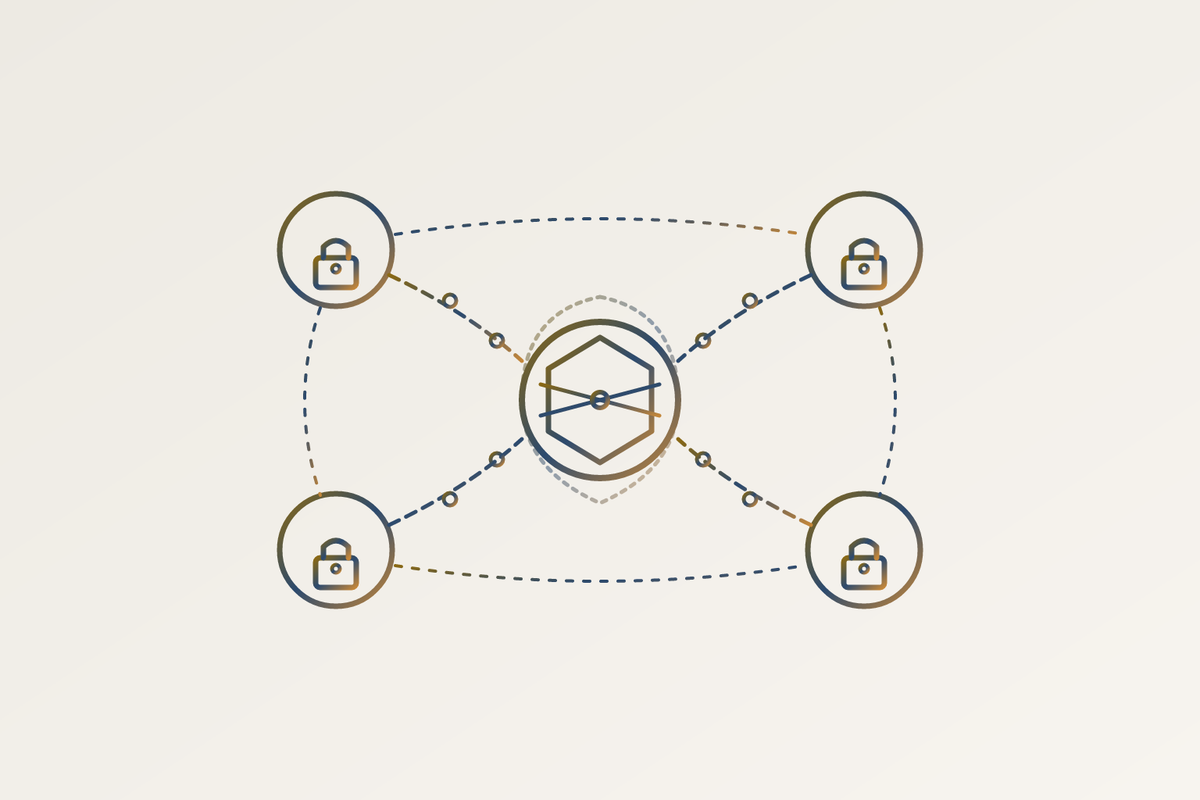
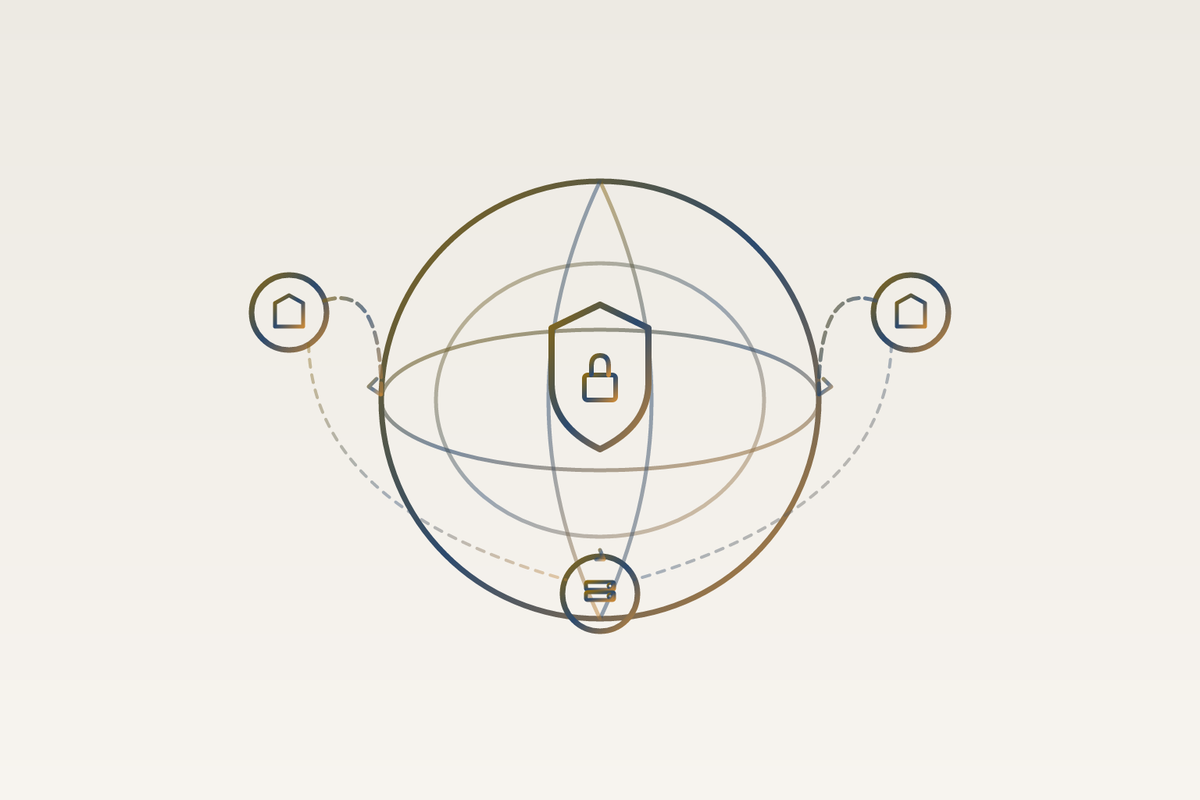
A policy can change with a blog post and a notice period. A cryptographic guarantee can't be quietly walked back the same way. Zero-knowledge architecture is one version of this: the platform coordinates whatever operation the tool needs to perform and enforces its own policies without ever holding the underlying secret it's protecting. Control gets enforced through cryptographic design, not through a permissions system someone could misconfigure or a policy someone could quietly revise. A zero-trust gateway model works similarly: an on-premises gateway component means raw data never leaves the customer's own infrastructure and never transits the vendor's servers at all, and encryption keys stay with the customer instead of getting handed over.
Transcend's Sombra gateway is a named example of this pattern. It runs on-premises, uses end-to-end encryption with enterprise-controlled key management, and is built so the vendor has no access to customer data by design rather than by policy. It was recognized as a Leader in the 2025 IDC MarketScape for Worldwide Data Privacy Compliance Software. Federated learning and split inference represent an earlier-stage version of the same idea, letting organizations get value from a shared model without raw data ever leaving their own infrastructure. Both approaches are still maturing, but they point at where enterprise AI privacy architecture is heading, and it's not toward better-written privacy policies.
For email threads, calendar entries, and message histories specifically, architecture like this means the content used to surface a warm introduction or flag a relationship never reaches the vendor's servers in a form anyone could read, even under a legitimate human-review carve-out. This kind of setup adds real deployment complexity, worth naming honestly, and it tends to show up only in higher-tier or enterprise-specific offerings. But weighed against what's actually being connected, a firm's entire relationship graph, the added complexity is the cheap option, not the expensive one.
The practical checklist before connecting any communication source to an AI tool
The sequence maps directly onto the four questions from the opening: training, retention, human review, sub-processors, plus a fifth step for keeping the answer current over time.
On training: check what tier the account sits on, and whether that tier contractually excludes training rather than just offering a settings toggle. If an opt-out exists, find out whether it applies retroactively to data already ingested or only going forward, because those are very different guarantees.
On retention: ask for separate retention windows covering inputs, outputs, and metadata, since vendors frequently treat these three categories differently. Confirm whether deletion is actually verifiable through an audit log or deletion certificate, or whether it's just a claim in a privacy policy with no way to check it.
On human review: find the specific contract language limiting employee or contractor access to customer data, and note whether a general safety-and-quality carve-out still exists underneath it. If it does, ask what conditions trigger that access and whether vendor employees operate under NDA and access logging when they use it.
On sub-processors: pull the published sub-processor list and check that it's current, not stale. Confirm a DPA is in place with each one touching EU residents' personal data, and look for right-to-audit language plus a defined breach notification window, 24 to 48 hours being the number worth holding vendors to, covering failures anywhere downstream in that chain.
On change monitoring: figure out how the vendor actually notifies customers when policy changes, versus burying it in a changelog nobody reads. Set a recurring reminder tied to major vendor product announcements, not just the annual renewal date, since that's when defaults tend to shift without much fanfare.
Tools that connect email, calendar, LinkedIn, and messaging apps to surface warm paths and relationship signals sit at the sharpest intersection of all five questions, because the data being indexed is the firm's relationship graph itself: the single most competitively valuable asset in the building. The minimum bar for anything in that category should include contractual training exclusion at the enterprise tier, explicit human-review limits written into the DPA, a published sub-processor list with DPAs actually in place, and, wherever possible, an architecture that keeps raw communication content out of the vendor's infrastructure entirely. That last point is what separates a promise from a technical fact, and it should decide the purchase, not sit as a bonus line on a vendor scorecard nobody reads past procurement.