Permissioned Data Architecture for Firm-Wide Relationship Intelligence
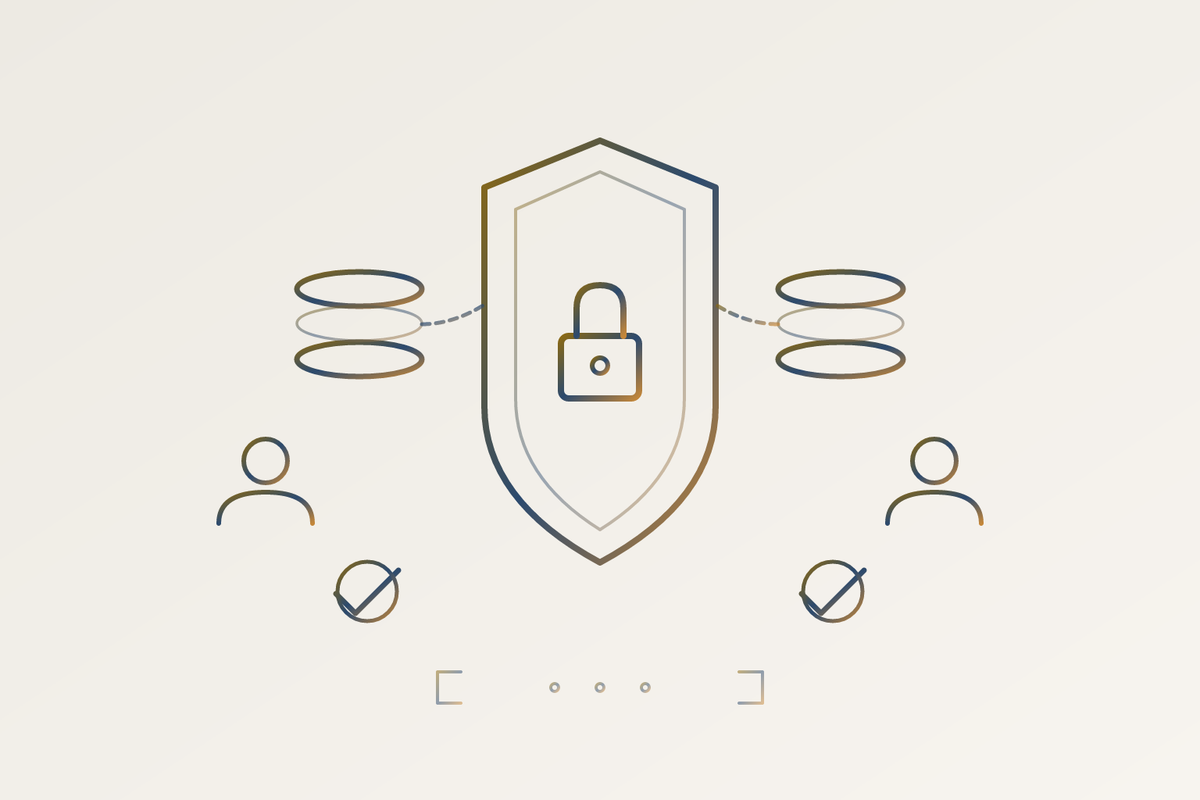
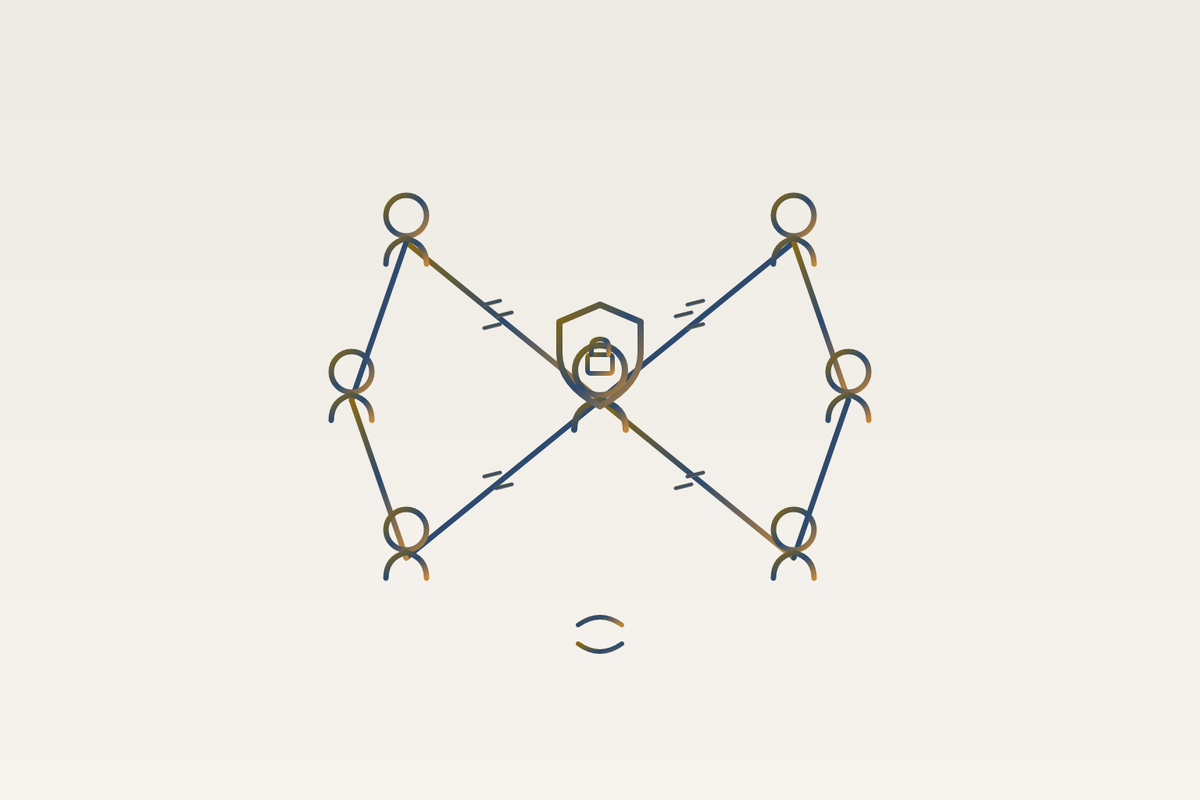
Firms must architect permissions into data pipelines before AI surfaces relationship intelligence.
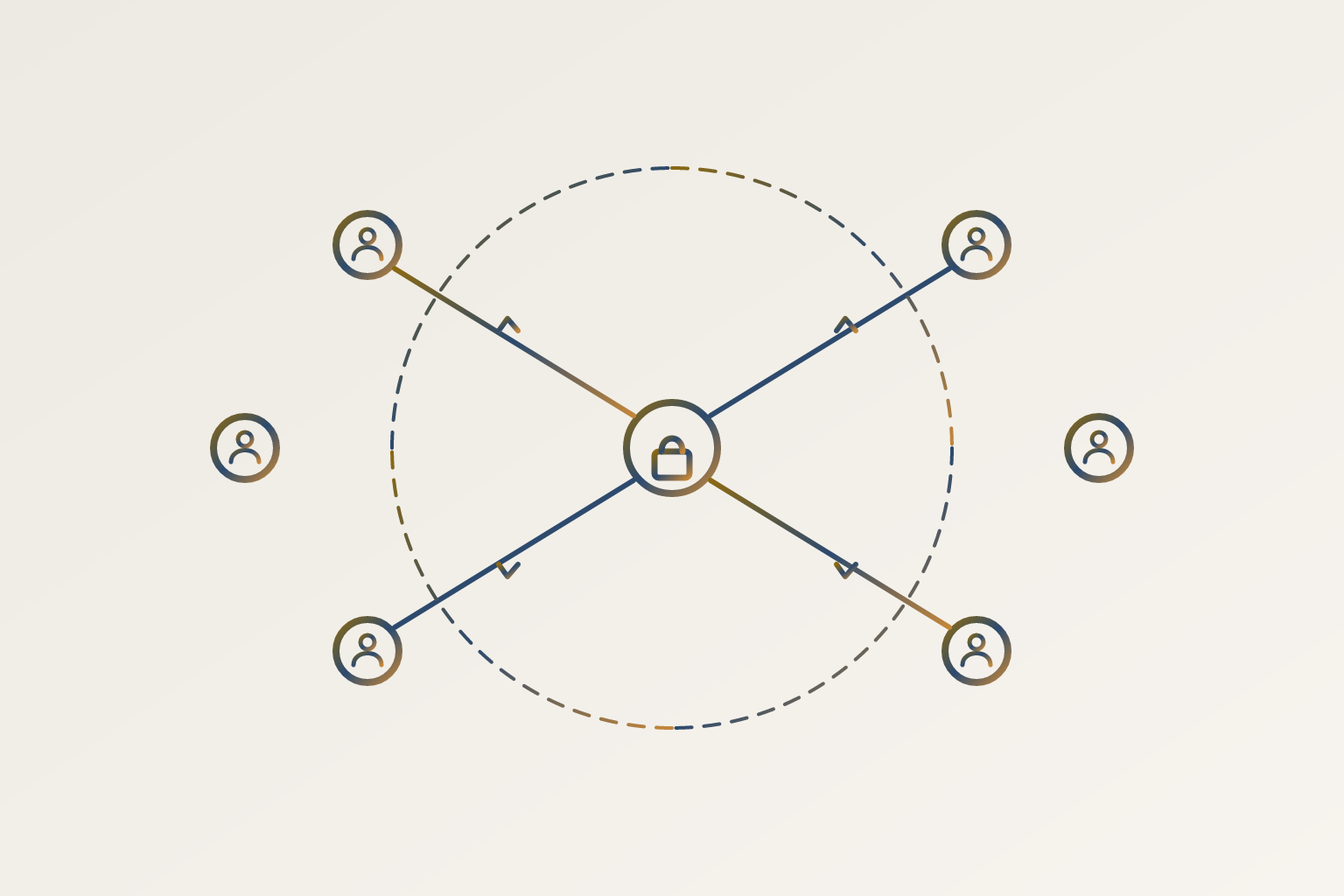
Permissioned data architecture is the design problem sitting underneath every promise made about relationship intelligence. Firms want a system that tells them who has the warmest path to a target, and the same infrastructure that surfaces that path can just as easily expose who talked to whom, when, and about what.
This gets decided before a single email gets ingested, and most firms get the decision wrong: they pool everything and assume access controls will sort themselves out later. Rarely do access controls sort themselves out, and by the time anyone notices, the fix requires tearing out the foundation rather than patching the wall.
Most firms operate on a simple assumption: share more data across the team, surface more opportunity. A partner's inbox holds a decade of relationship history, and an associate's LinkedIn connections map to half the founders in a portfolio's target sector. Pool it all, the thinking goes, and the firm sees paths no individual could see alone. That premise has a flip side most firms have not reckoned with, though. The data that reveals a warm path to a target is the same data that reveals private negotiation context, candid assessments, and conversations never meant to travel past the person who had them.
Take a partner's email thread with a founder mid-negotiation. Buried in it is real relationship signal: how often they talk, how warm the tone is, how recently they last connected. A firm-wide intelligence layer wants to surface exactly that signal. The same thread also contains the actual terms being discussed, the partner's private read on the founder's leverage, maybe a line about a competing term sheet. Surfacing the signal without surfacing the content is the design problem, and most firms have not solved it, largely because they have never framed it as an architecture question at all.
The stakes are not hypothetical: documented incidents have shown what happens when this problem goes unsolved inside a major enterprise AI product. Documented incidents have shown how retrieval pipelines in enterprise AI products can be manipulated to surface sensitive corporate data without conventional user interaction. Consider the mechanism for a second: vector databases, the retrieval layer underneath most enterprise AI tools, tend to treat everything fed into them as one flat lake of content. The permission logic that lived in the original source system, the rule that said only these three people can see this file, does not automatically travel with the data once it becomes a chunk in a vector index. That is a structural feature of how retrieval-augmented generation gets built, and it shows up anywhere a firm bolts an AI layer on top of unstructured data without solving permissioning first.
For investors, founders, and business development operators, the exposure risk is not abstract. These are trades built on trust, where one leak (a counterparty's identity, a term still under negotiation, a connection being quietly cultivated before it is ready to go public) can unwind the deal and the relationship behind it. A blanket restriction on data flow kills the product without solving the underlying exposure. What holds up is an architecture that draws a hard line between personal context and institutional signal, and enforces that line at every layer, not just at the interface.
What "relationship intelligence at scale" actually requires from a data architecture
Strip away the marketing language and relationship intelligence is a narrow technical ask: a queryable layer that can answer, with evidence, who in a firm has the strongest path to a given person, and how the system knows that. A CRM field somebody filled in eighteen months ago answers a different, weaker question. What matters is a live signal, derived from actual interaction patterns, that updates as relationships change.
For that to work at scale, two things have to be true at once, and they pull in opposite directions. Individual relationship context (the content of conversations, the sensitivity of a connection, the private read one banker has on a difficult client) needs to stay private. Institutional relationship signal (the existence of a relationship, how recently it was active, how strong it appears based on interaction frequency) needs to become visible across the firm. Get one right without the other and the whole thing defeats its own purpose. A system that protects privacy so completely that nobody can see who knows whom is just an expensive filing cabinet; a system that surfaces everything is a liability wearing a product interface.
What counts as institutional signal, in practice? Connection graphs, showing who at the firm is linked externally and how strong that link appears to be. Recency and frequency data pulled from communication patterns, without ever reading the communications themselves. Warm path rankings that trace second- and third-degree routes to a target and rank them by quality across the whole firm, not just one person's contacts.
Personal context, by contrast, is everything the graph should never expose directly: the actual text of emails and messages, the substance of meeting notes, private assessments of a person or a deal in progress. That distinction sounds obvious stated this way, but it gets much harder to hold once data starts flowing through pipelines built by engineers optimizing for retrieval accuracy, not privacy boundaries.
Why does any of this matter for the bottom line? The gap between firms that generate a steady stream of introductions per outreach attempt and firms that struggle to get warm intros at all is rarely a gap in effort. It is a gap in visibility, and the less effective firm cannot see which paths are already warm somewhere inside its own network. That gap reflects an architecture failure dressed up as a sourcing problem, and it does not get patched at the application layer after the fact. Permissioning has to be designed into ingestion, classification, and surfacing from the first pipeline; retrofitting privacy onto a system built without it is close to impossible.
The three-layer permission model that makes this separation possible
Picture the architecture as a stack: three layers, each with its own access boundary and its own rules about who gets to see what.
Layer one is private context: raw communication content, meeting notes, personal assessments. This layer belongs to the individual who created it, full stop, and nobody else at the firm sees it by default. That has to be a guarantee built into the system, not an aspiration written into a policy doc somewhere.
Layer two is permissioned team signal. This is aggregated interaction metadata (who is connected to whom, how recently, how often) shared across a defined team or deal pod, but only under explicit consent from the person whose data it is. The owner decides whether their signal contributes at all, and that decision carries the entire legitimacy of the layer. A partner might be comfortable sharing calendar metadata, meetings happened, roughly this often, but not want email interaction patterns feeding the shared pool. The architecture has to support that granularity, source by source, not as an all-or-nothing toggle.
Layer three is the firm-wide institutional graph: the network map built from everything contributed at layer two, aggregated across the whole firm. Authorized users query this layer for warm paths and relationship strength, and this layer shows no underlying personal content. It answers who knows this person, and how well, without ever surfacing why the system thinks so.
The consent architecture underneath layers two and three is what makes the whole thing legitimate rather than just technically functional. Contribution is opt-in, source by source, and there is no retroactive sweep of historical data into the graph without the owner affirmatively choosing to include it. A firm that quietly backfills five years of email history into a shared graph without asking anyone has built something closer to a surveillance system, whatever the marketing materials call it.
Enforcing all three layers requires role-based access control, but the frame matters here more than the acronym does. RBAC at the document level, where permissions travel with the actual unit of data rather than being inferred from whatever role the requester happens to hold, is the version that holds up under real use. Whether a piece of data should be shared at all depends on structural attributes: lifecycle state, approval status, ownership, sensitivity classification. This is where most vendors quietly fail before they even start. Every source system, email APIs, calendar APIs, LinkedIn connectors, models authorization differently, and one system's "shared" folder means something entirely different from another's. A relationship intelligence platform has to normalize all of that into one consistent permission layer before any of it touches the graph. Skip that step, and the layer model above stays a diagram rather than a control.
Done right, the payoff is specific: a query like who knows the CFO of Company X returns a ranked list of firm members and a relationship strength score, without the email thread where one of them discussed something sensitive with that CFO last quarter. The system answers the question that was asked, and stops there.
Where permission architectures break down in practice
The flat-lake failure mode is the one worth understanding in detail, because it explains most real-world breakdowns. Vector databases used in retrieval pipelines strip out the permission logic that lived in the original source system. By the time a language model retrieves a chunk of that data to answer a question, it has no idea the original document was ever restricted to three people; it just sees text that matched the query well.
Better models will not fix this on their own. This is a permission normalization problem, and it has to be solved upstream, before anything gets embedded into a vector index, rather than filtered afterward on the way out.
Three mistakes show up again and again, and the second one is the mistake most vendors actually make while believing they have solved the problem. First: treating every connected data source as equally permissioned simply because a user authenticated once at the application layer. Logging into the platform is not the same as having access to every document that platform can reach. Second, and this is the one worth sitting with: applying permission checks at query time instead of at ingestion. That sounds like a reasonable compromise until the mechanics get spelled out. The sensitive data is already sitting in the index; the system is just deciding, after the fact, whether to show it to a given user. The exposure already happened at ingestion, which makes the query-time filter closer to damage control than prevention. This is the design choice that should disqualify a vendor outright, and it is also the one easiest to miss during a demo, because the product behaves correctly right up until someone asks it the wrong question. Third: failing to propagate permission changes. If a document gets reclassified, or an employee's access gets revoked, the embedded representation sitting in the vector store frequently does not update to reflect that, and the old, more permissive version keeps surfacing indefinitely unless someone built a mechanism to catch it.
Layer an AI agent on top of this, and the blast radius grows fast. Cases where AI agents have exceeded their intended permissions have been documented across enterprise deployments widely enough that it should not surprise anyone building in this space. Agentic systems that can read, draft, and retrieve across connected sources amplify a firm's existing permission gaps, because an agent acting autonomously can touch far more data, far faster, than a human clicking through folders one at a time. The design principle that follows is inconvenient but not complicated: AI drafts and recommends, and a human affirmatively approves every send and every piece of information surfaced to a third party before it goes out.
There is an edge case firms tend to overlook entirely until it happens: what occurs when a relationship owner leaves. Their contributed signals, the connections they consented to share at layer two, do not automatically vanish from the institutional graph just because they walked out the door. The architecture has to define, explicitly, what happens next. Does that signal expire? Does it require re-consent from someone else? Does it get archived and frozen? Leaving this undefined amounts to a choice, made by default, to let departed employees' data persist indefinitely, which raises its own consent problem. Research published in the VINE Journal, by Farooq and Durst, found a strong positive relationship (β = 0.83) between employee turnover intentions and knowledge loss inside organizations. Relationship graphs face precisely this risk, structurally: if the departure of one senior person voids a meaningful chunk of the firm's institutional memory, the graph was never really institutional to begin with. It amounts to one person's contact list wearing a firm-wide interface.
How compliance and regulatory requirements shape the architecture choices
GDPR sets the floor here, and it is a lower floor than many firms assume. Contact histories, communication metadata, inferred connection strength: all of it counts as personal data under the regulation, whether or not the underlying message content ever gets touched. Regulatory guidance has consistently found that large language models rarely satisfy GDPR requirements by default. That finding puts the compliance burden on the surrounding system architecture rather than on the model itself; a firm cannot outsource its GDPR obligations to whichever vendor built the AI layer. Processing relationship signals lawfully generally requires a defined basis (legitimate interest and consent are the two that come up most, though contractual necessity applies in specific cases), and each basis comes with a documented purpose limitation attached. A firm cannot claim legitimate interest for one use and then quietly repurpose the same data for something else.
The The EU AI Act adds another layer, and its phased implementation timeline is already shaping how firms think about system classification and compliance obligations. Systems that influence high-stakes professional decisions, deal sourcing, intro routing, even hiring-adjacent workflows, may fall within regulated categories depending on how they are deployed. The documentation, transparency, and human oversight requirements built into the Act line up neatly with the "AI drafts, human approves" principle described above; that is the same underlying logic showing up in both regulatory design and sound product design, arrived at from two entirely different directions.
For financial services firms specifically, DORA, the Digital Operational Resilience Act, has taken effect, and it mandates ICT risk management along with third-party risk oversight for investment firms and the technology vendors they rely on. A relationship intelligence vendor counts as a third-party ICT provider under this framework. Due diligence on that vendor's architecture is a compliance obligation the firm itself carries, not an optional step during procurement.
SOC 2 certification has become the practical gate that decides whether a vendor even gets a meeting with institutional buyers. Enterprise customers and institutional LPs generally will not sign with a vendor that cannot demonstrate SOC 2 compliance. Evolving updates to the SOC 2 framework are increasingly expected to fold in AI governance criteria, meaning certification and AI architecture review are no longer separate conversations. A vendor that leads its sales pitch with SOC 2 as a differentiator is, in a sense, revealing that the deeper architecture conversation has not happened yet. Treated as a headline claim rather than table stakes, SOC 2 reads as a tell.
Data residency rounds out the picture. Architectures that scan and classify data inside a customer's own infrastructure, rather than copying that data into a vendor's cloud environment, satisfy data sovereignty requirements in a way that cross-border cloud processing structurally cannot. For firms operating across multiple jurisdictions, that distinction alone can determine which vendors are even eligible for consideration.
What a well-architected relationship intelligence platform looks like in practice
Relationships live in email, calendar, LinkedIn, and messaging apps, more consistently than in whatever CRM fields a firm has managed to get people to fill out. The core integration surface for any serious relationship intelligence layer has to connect to those tools passively, capturing signal without asking anyone to manually log a meeting that already happened.
Passive capture has a hard boundary, and it is worth stating plainly: it does not mean ingesting content indiscriminately. The architecture has to separate metadata (who communicated, when, how often) from actual content (what was said) right from the point of ingestion. Blur that line and the system inherits every problem described above.
The output a user actually interacts with is a queryable graph. Someone types a question: who at the firm has the warmest path to the head of corporate development at Company X? The system returns a ranked list of colleagues and a relationship strength score for each, without ever surfacing the underlying emails or messages that produced that score. If outreach is warranted, the system can draft it, but drafts it in the voice of the person asking the question, not the colleague whose relationship is being tapped, and nothing goes out the door without that person explicitly approving it.
Rolo's approach follows this model directly: a firm-wide relationship graph that surfaces warm paths and ranks connections by relevance and recency across a team, while keeping the underlying personal context private and permissioned throughout. Outreach gets drafted, never sent autonomously.
The broader platform landscape for private capital firms takes different approaches to the same problem, and the differences are instructive. Rolo, Alpha Watch's warm-path finder for investors and operators, is one tool built on permissioned relationship indexing rather than pooled data access. Affinity is widely used in private capital, offering automated activity capture and relationship intelligence as core features. Some newer entrants position themselves as AI-native platforms that aim to bring CRM, deal intelligence, and company data together in one system. Whatever platform a firm evaluates, the questions that actually separate a well-built system from a fragile one stay the same. Does permission logic travel with the data from the moment it is ingested, or does it only get checked at query time? Does the platform operate inside the firm's own infrastructure, or does it copy data into a vendor-controlled cloud? And what, specifically, happens to a departed employee's contributed signals? A vendor without a clear answer to that last question has not finished building the product, no matter how polished the demo looks.
That last principle, no autonomous send, deserves to be understood as a trust mechanism rather than a feature toggle. In high-trust professional environments, the entire value of a tool like this rests on the firm's confidence that it will never act on their behalf without explicit sign-off, and that confidence has to be built into the architecture itself, not asserted in a policy document. Policy documents state intentions without enforcing anything on their own, and the system has to make the unauthorized action structurally impossible, not merely discouraged.
How firms should evaluate their current architecture before deploying relationship intelligence at scale
Four questions tend to reveal, fairly quickly, whether a firm is actually ready to deploy something like this, or whether the deployment runs headlong into problems the firm has not yet named.
Where does relationship data currently live, and who owns each source? Email typically sits with IT. LinkedIn access is usually individual, tied to a personal account rather than a firm-wide one, while calendar data might be shared across an assistant or a pod. Each source carries different assumptions about who is allowed to see what, and those assumptions rarely line up with each other.
Has the firm actually written down what counts as personal context versus institutional signal? Put simply: into an actual data policy that a new hire could read and understand, rather than an implied assumption everyone supposedly agrees on. Most firms have not done this, which means the distinction exists only in individual judgment calls, made differently by different people, none of them consistent with each other.
Do the firm's current systems propagate permission changes? If someone's access gets revoked, does that revocation flow through to every system holding data they once touched, or does it apply going forward only in the one system where the revocation was entered?
And has the firm inventoried what relationship intelligence walks out the door when senior people leave? Most have not, largely because doing so requires admitting how much institutional memory currently lives in one person's head, or one person's inbox, rather than anywhere structured.
A quick audit tends to surface the same pattern at most firms: relationship data scattered across email, calendar, a CRM nobody fully trusts, and a handful of individual spreadsheets, none of which share a permission model with any of the others. That fragmentation is fragile in a specific, measurable sense. When relationship knowledge lives in one senior person's inbox instead of a structured, permissioned graph, the firm's institutional memory is only as durable as that person's continued employment. The 0.83 correlation between turnover intentions and knowledge loss found in the Farooq and Durst finding is not an abstraction here; it describes exactly what happens when a firm's most valuable relationships have never been captured anywhere the firm itself actually controls.
That raises the sequencing question, probably the most important one in this entire piece. Permission architecture needs to be designed and agreed upon internally before any relationship intelligence tool goes live, rather than worked out afterward as problems surface. Firms that deploy first and govern later end up reproducing the exact failures documented across 2025: compliance gaps discovered after the fact, AI agents that exceeded their intended permissions because nobody defined those permissions precisely enough in advance. Sequencing it the other way, tool first, governance later, tends to mean finding out the hard way.
None of this requires a perfect graph on day one. What it requires is a permission model, explicit and in writing, about what gets shared, who consented to share it, and where the boundaries sit, paired with a vendor whose architecture actually enforces those boundaries rather than asking the firm to trust a policy document. Firms that get this right early are building a compounding institutional asset: a memory of relationships that survives personnel turnover, surfaces warm paths across the entire network rather than one person's corner of it, and operates inside the trust boundaries that high-stakes professional relationships have always demanded, long before anyone thought to call this relationship intelligence at all.