Introduction Email Template Between Two Professionals
Trust transferred through a connector's credibility works better than any cold pitch.

A professional introduction email moves trust, not just information. When a connector puts their name on an introduction, they lend their reputation to both parties at once, and that loan is the actual value being delivered, with the email serving only as its vehicle. Jared Fuller, Partner and COO at OpenEd, frames it precisely: "When you leverage an intro, you're not just asking for a referral, you're borrowing someone else's hard-earned trust." That sentence explains why warm introductions produce response rates and conversion rates that cold outreach cannot touch. A recipient's guard drops because someone they already trust has vouched for the sender before a single word of the pitch arrives.
That transfer is not automatic. It happens only when the email demonstrates real knowledge of both parties and states a legitimate reason the connection serves them both. A hollow introduction, one that trades on a name without substance behind it, damages the connector's credibility along with the sender's. Consider what the recipient is actually evaluating: not the sender's pitch, but the judgment of the person who sent it their way. Every subsequent section of this piece, the timing of the ask, the structure of the email, the templates themselves, exists to protect that judgment and spend it deliberately.
When a warm introduction is worth asking for
Because trust is a finite resource once borrowed, deciding whether to ask for a warm introduction at all is a judgment call that shapes whether the eventual email succeeds or becomes an awkward favor nobody wanted to grant. A few recognizable situations justify the ask clearly. Breaking into a new market or vertical, where no internal connection exists, often calls for a partner or mutual contact who can provide legitimate access that cold outreach simply cannot buy. Reaching a gated decision-maker, a C-suite executive who ignores unsolicited outreach but responds to a peer's personal vouch, is close to the purest case for a warm path. A high-value lead who fits tightly but has shown no inbound signal is another: the warm path converts a prospect who would otherwise sit ignored in a queue. Re-engaging a relationship gone cold works the same way, using a mutual connection to restore context before reaching out. And skeptical prospects who have been over-pitched by competitors respond to the third-party credibility an introduction supplies in a way that no amount of sender polish can replicate.
Sometimes the relationship behind the ask is thinner than it looks, and when a connector only knows the target at a surface level, or when the benefit to the recipient is unclear, or when the ask extracts more from the connector than it returns to anyone, the request should not be made. The operating rule is simple: a professional gets what they give. Before asking, three things deserve confirmation: the right contact at the target (the decision-maker, the budget holder, whoever actually owns the pain point), genuine trust between the connector and that contact, and a clear answer to why the connection benefits both sides. Skipping that checklist means the email that follows, however well written, is built on a request that should not have been made.
The double opt-in getting permission before writing a word of the email
The single most common reason a warm introduction underperforms is that the connector was never genuinely consulted. Without that consent, the trust the email claims to carry was never actually authorized, and the recipient can often sense it. Surprising someone with an unwanted introduction costs everyone involved: it signals that the connector does not know the recipient well enough to predict whether they want to be contacted, and that signal undercuts the very credibility the email is supposed to borrow.
The practical ask to the connector should be narrow and low-pressure. Explain who the sender is trying to reach, why the connection is genuinely valuable to both parties, and make saying no as easy as saying yes. Nobody should feel cornered into granting a favor they only half-want to give.
The professional standard beyond that is to write the connector's outreach for them: a short, pre-drafted message, often called a forwardable blurb, that the connector can send as-is or edit lightly. That blurb needs little: the sender's name, role, and company in a single sentence, a clear statement of why the connection matters to the recipient, and a stated ask. It runs shorter than the eventual introduction email itself, because the connector's credibility, not the word count, is doing the persuasive work.
One might argue this looks like scripting someone else's words for them, but the opposite is true: a well-drafted blurb respects the connector's time and improves the quality of what eventually reaches the recipient. This logic only holds, though, if the relationship is reciprocal over time. Professionals who regularly offer introductions, intelligence, and other value to their own network tend to find opt-in requests welcomed. Those who only extract, asking for favors without ever supplying one, tend to find the well runs dry.
The anatomy of an introduction email what each component is doing
Once the opt-in is secured, the writing itself becomes a matter of components, each with a distinct job, and understanding those jobs separates someone copying a template from someone adapting one with judgment.
The subject line has one task: earn the open. It should name the context, not the pitch, and the practitioner-tested format "Name1 (Co) <> Name2 (Co) | Warm Intro" accomplishes that by signaling immediately who is being connected and why the email exists. Subject lines should stay short, since a substantial share of email opens happen on mobile screens where long lines get truncated before they make their case. Personalized subject lines, the ones carrying a name or specific context, meaningfully outperform generic ones on open rate. Vague teaser lines, overselling the relationship, or subject lines that bury the names all work against the one job the subject line has.
The greeting sets the register, formal or informal, and that register should match the existing relationship between the connector and the recipient.
The opening line establishes who the sender is and the shared context in one to two sentences, and the recipient should understand immediately why the email exists and who authorized it. The connector's name belongs in that first sentence specifically, since it functions as the credibility signal that keeps the message out of the trash folder.
The body gives the recipient a specific, relevant reason the connection is worth their time, in two to four sentences at most. The argument has to be recipient-centric: what does this connection do for them, not for the sender. Specificity carries the trust here. Vague claims about "synergies" or "alignment" tell the recipient that the sender does not actually understand their situation.
The call to action should ask for one frictionless next step, something the recipient can answer in a single word. Offering a specific, easy option, a 20-minute call, a reply to confirm interest, a suggested time, works better than leaving the next step open-ended. Ambiguity is where momentum dies.
A brevity discipline runs through all of these components. The longer an introduction runs, the more it signals that the sender does not trust the connection to speak for itself.
Four templates for the situations professionals face
These four formats are not interchangeable, and using the wrong one in the wrong context signals exactly the kind of inauthenticity that kills a warm introduction before it has a chance to work.
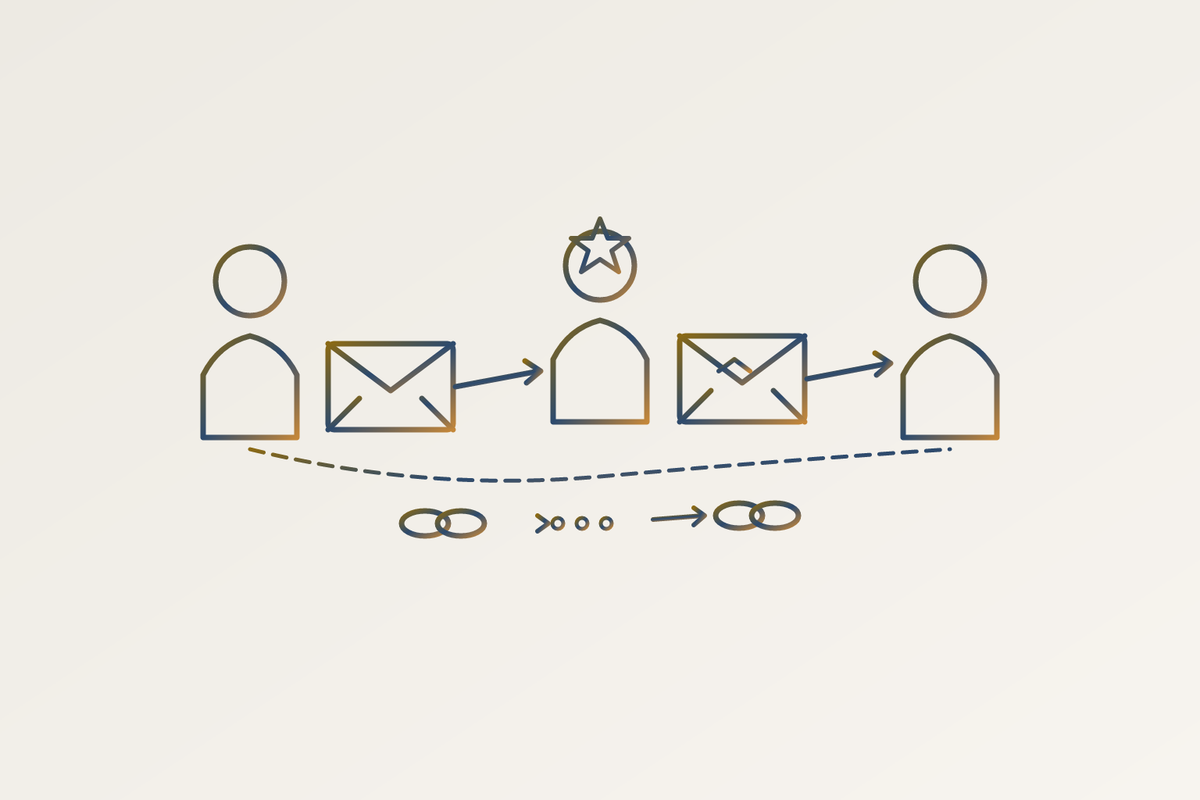
Template 1 is the connector-facilitated double introduction, the standard warm intro, used when the connector genuinely knows both parties and is making a bilateral introduction. The connector's voice carries the whole email. Both parties are named in the subject and opening, the benefit to each person is stated specifically, and the message closes with a light hand-off: "I'll leave it to you two to take it from here." The tone stays warm and brief, since the connector's own credibility is doing the persuasive work, not the prose.
Template 2 is the forwardable blurb, drafted by the requester but sent by the connector, used to minimize the time the connector has to spend. It is written in the connector's voice, opens with the connector's relationship to the recipient, introduces the requester in a single sentence, states the value, and closes with a low-friction ask. It should run shorter than any other template here, since the connector's name is carrying the weight and the text only needs to enable that, not reinforce it.
Template 3 is the self-introduction with a named reference, used when the connector has consented to being named but is not personally sending the email. The mutual connection's name appears in the first sentence, the basis of that relationship gets a brief explanation, and the message pivots quickly to the value for the recipient. This format carries less weight than a direct introduction, since the trust transfer is only partial, so the value proposition has to work harder to compensate.
Template 4 is the re-introduction after a gap, used to reactivate a relationship that has gone dormant, a past meeting, a conference connection, a collaboration that lapsed. It acknowledges the shared history immediately, resists the urge to over-explain the silence, names the current reason the reconnection is timely, and offers a specific, easy next step. The tone should read as natural and direct. Over-explaining a gap tends to create the very awkwardness that brevity would have avoided.
The most common ways professionals degrade the trust an introduction is supposed to carry
Most introduction emails fail because the email itself signals that the sender does not understand what they are asking the connector to lend.
Skipping the opt-in tops the list: the connector gets surprised by being named in an introduction they never authorized, which damages their credibility with the recipient and poisons the message before it even lands. Writing for the sender instead of the recipient is the second most common failure. The body explains what the sender does and wants, with no clear statement of what the recipient gains, and this is both the most common failure and the easiest one to fix. A vague or absent subject line forces the recipient to do work before they know whether the email is worth opening, and most will not bother. Running long signals either that the sender is not confident the connection is worth the recipient's time, or that they are using the introduction as cover for a pitch, and recipients tend to notice either way. A call to action that asks for too much, a request to "find a time that works" with no options offered, or a long meeting proposed before any value has been established, creates friction exactly where the email needs none. Naming a connector who has not genuinely authorized the mention, treating a conference acquaintance as a warm reference, is a credibility gamble that backfires the moment the recipient checks. And asking the connector to draft the introduction from scratch, rather than handing them a forwardable blurb, extracts more from the relationship than it needs to and typically produces a vaguer email than the sender would have written themselves.
Each of these failures traces back to the same root concept from the opening section: the email is a vehicle for borrowed trust, and every shortcut taken in its construction either preserves that trust or spends it carelessly.
The best path to any target is usually already inside the network a professional has
Most professionals do not struggle with how to write a warm introduction once they know a path exists. The real limiting factor is discovering that the path exists. Relationship data of this kind sits scattered across inboxes, calendars, and the individual memories of colleagues across a firm, rather than visible as a single shared map anyone can query on demand.
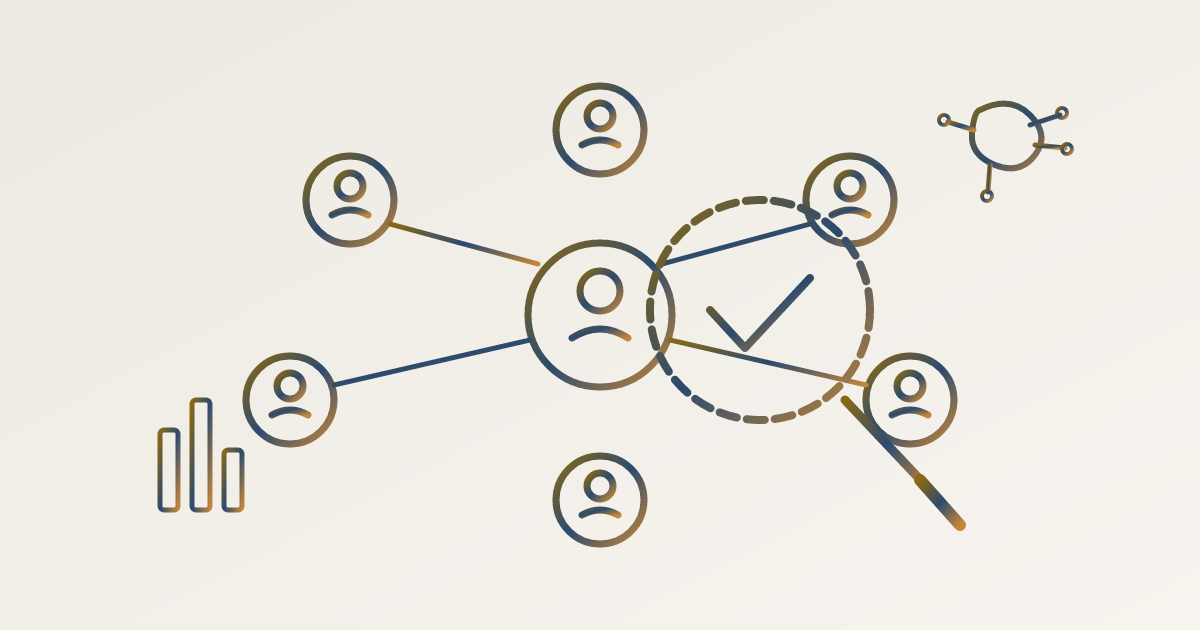
That raises an important question: if the warmest path to a target is often already inside a firm's existing network, why does it go unused so often? The answer has less to do with relationships and more to do with visibility. Relationship intelligence as a category of tools addresses this directly. It collects communication data a firm already generates, emails, calendar meetings, contact records, and turns that raw activity into a queryable map of who knows whom, how recently, and how strongly.
The output of that kind of system is a scored network graph, and when a firm identifies a target, the question that matters most, "does anyone here already know someone there?", gets answered instantly by surfacing the warmest path across the entire firm's collective network rather than relying on one person's memory of who they met at a conference two years ago. The templates and the opt-in protocol covered earlier in this piece assume a warm path has already been found. For most firms, building the visibility to find that path is the harder and more consequential problem.