Relationship Intelligence vs Traditional CRM for Deal Teams
Deal teams need relationship signals, not transaction records.

Traditional CRM architecture was designed for linear sales pipelines: sequential stage progression, manual data entry, account ownership, clearly bounded funnels. For a sales organization moving a recurring software product through a defined buyer persona, that structure is coherent. For a deal team, it is a category error.
The foundational design assumption is that relationships are stable records to be logged, not dynamic signals to be read. That assumption holds when your pipeline is predictable and your relationships are essentially transactional. It collapses when opportunities emerge through conversations and introductions that develop non-linearly over months or years, which is how deals actually form in private markets.
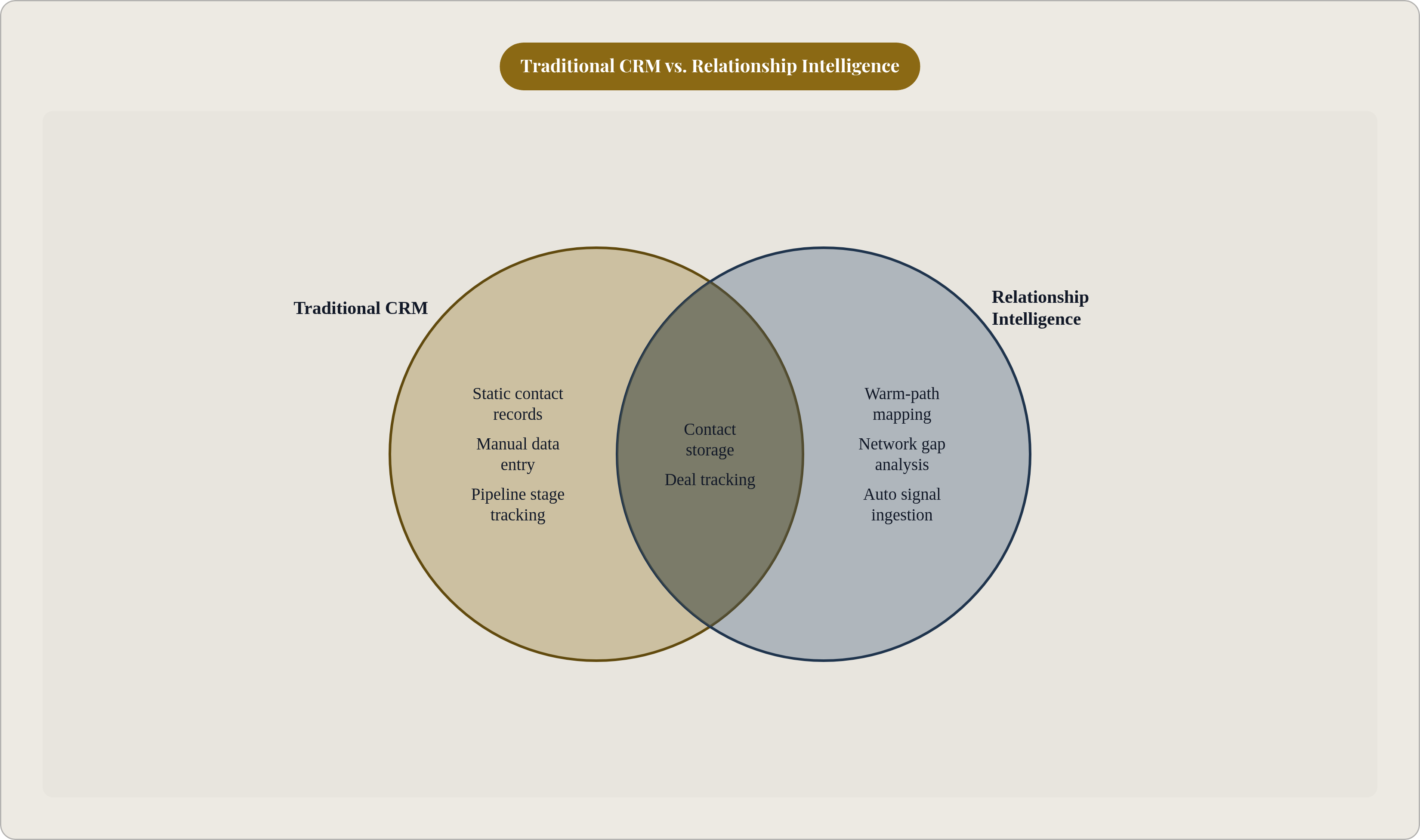
No traditional CRM has a native concept of relationship strength, recency of contact, or warm-path mapping. The system stores who you know. It has nothing to say about how well you know them, through whom, or how recently that relationship was meaningfully active. Those are precisely the variables that determine whether an outreach gets returned or ignored.
Fund-specific complexity compounds the mismatch further. Generic CRM architecture fails to account for fund-level information walls, LP data segregation, portfolio company contact hierarchies, or co-investor relationship tracking. The access permission models most CRMs offer were built for enterprise sales teams, not for the compliance and confidentiality requirements of a private markets firm.
The result is predictable. Deal teams default to spreadsheets, inboxes, and disconnected tools. The system becomes a filing cabinet: it records the past but offers no intelligence about the present, which is the only moment that determines whether you get to the right introduction first.
The Manual Upkeep Problem That Makes CRM Data Unreliable at the Moment It Matters
Nearly half of CRM projects fail due to lack of adoption. A system that isn't used is worse than no system, because it creates false confidence: the data looks complete from a distance, but the completeness is illusory.
The upkeep burden is not trivial. A meaningful share of professionals who rely on CRM systems report spending more than an hour daily on manual data entry. In a sales organization, that cost falls on people whose principal value is in volume and process. In a deal team, it falls on people whose value is in judgment and relationships. The opportunity cost calculus is structurally different, and structurally worse.
CRM data decays continuously regardless of how diligently it is maintained. Contacts change roles; deals stall and restart; relationship context accumulates in email threads, video calls, and offhand conversations that never get logged because no one has time to log them. The decay problem is worst precisely at the moment of highest stakes: when a partner needs to know who on the team has the strongest path to a specific target, the answer the CRM provides reflects whatever was entered most recently, not what is actually true.
There is a recent trend of bolting AI onto legacy CRM infrastructure. Machine learning trained on incomplete, stale data surfaces confident-sounding but wrong answers, and that outcome erodes trust faster than no AI at all. The underlying data quality problem is unchanged; an algorithm is now simply querying it with more authority.
The structural question worth sitting with: what would it look like if the system captured relationship signals automatically, from the places where relationships actually live?
What Relationship Intelligence Is and How It Reads Network Signals Differently
Relationship intelligence, as a category, refers to the systematic capture, analysis, and activation of relationship data across an organization's collective professional network. The label, though, is less interesting than the architectural departure it implies.
Where a traditional CRM stores static records that humans update, a relationship intelligence layer ingests interaction metadata continuously, drawing from emails, calendar events, meetings, and messages, and infers relationship strength and recency algorithmically. The system updates as conversations happen, without anyone deciding to log them.
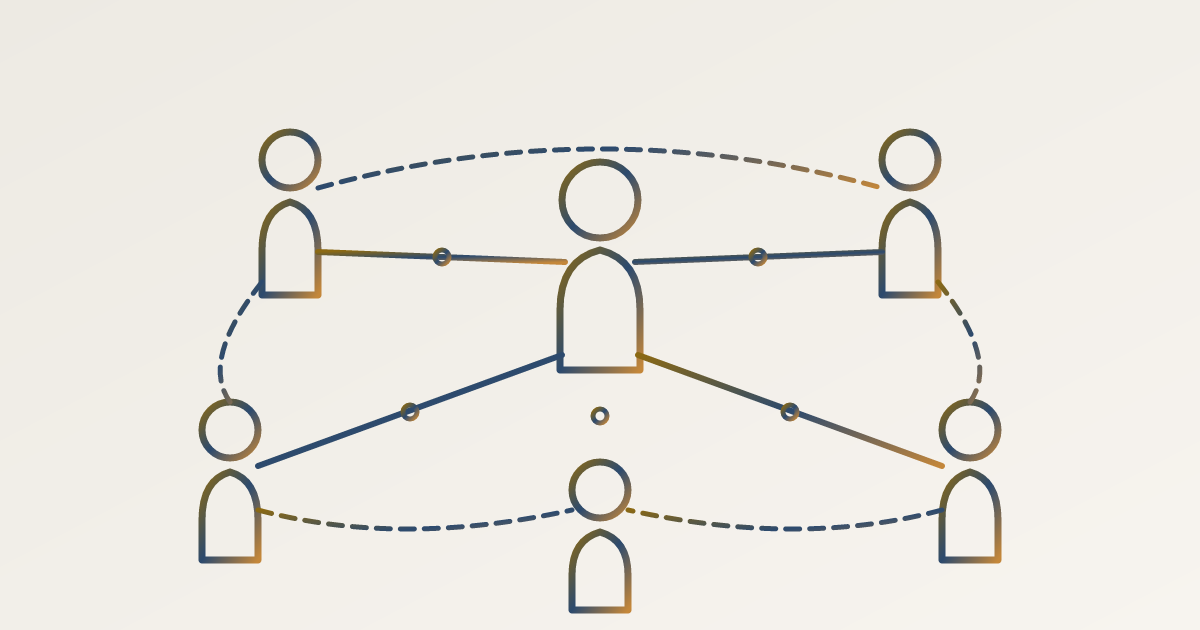
What that architecture surfaces includes several categories of signal that deal teams actually need. Warm-path mapping shows who on the team is best positioned to make a specific introduction, ranked by relationship strength and recency. Relationship scoring reflects how engaged an LP, co-investor, or target actually is, based not on a logged call but on actual communication patterns. Network gap analysis identifies where the firm's collective relationships are thin relative to a sourcing target. Hidden connection mapping surfaces second- and third-degree paths that no single partner's memory would find: the co-investor who knows the founder, the LP whose portfolio company CFO came from the target.
Relationship intelligence doesn't replace a CRM's pipeline tracking function. Pipeline management still requires a system of record. What relationship intelligence adds is the layer that tells you how to move through the pipeline, not just where things sit within it. The two functions are complementary but distinct, and conflating them is one reason firms evaluate relationship intelligence tools as if they were CRM replacements.
Privacy architecture is not a secondary concern in this design. The value of a firm-wide relationship graph depends entirely on whether individual relationship context stays appropriately private while institutional signals become collectively useful. That is a design requirement, not a feature toggle.
Why Warm Introductions Convert at Structurally Higher Rates Than Cold Outreach (and What That Means for Sourcing)
The mechanism behind a warm introduction's advantage is straightforward. A warm introduction transfers credibility. The decision-maker skips the question every cold approach must answer first (whether this person is worth their attention) and moves directly to evaluating the opportunity itself. That compression of the trust-building phase is not cosmetic; it is the entire economic advantage.
In venture capital, the majority of deals originate through network connections: co-investor referrals, portfolio company introductions, professional network paths. Cold inbound is a small fraction of what closes. The directional evidence is consistent across the market, even where precise firm-level data is difficult to obtain.
Data from private credit origination makes the conversion difference more concrete. Across several middle market lending studies, warm-sourced opportunities convert to closed deals at rates meaningfully higher than purely competitive processes, with some analyses suggesting a multiple of three to four times. Warm-sourced deals also tend to close on tighter timelines and, in some cases, carry incremental spread, suggesting the relationship premium is economic, not merely logistical. Sponsors with strong proprietary referral networks consistently outperform those relying heavily on broadly marketed processes, a pattern visible in origination reports from Golub Capital, Blue Owl, and similar middle market lenders over the last several years.
Deal sourcing data from PitchBook and other providers consistently shows that the share of middle market transactions originating through intermediary referral has grown during a period when many firms were also expanding business development headcount. Firms hired more people to do cold outreach and still saw warm-path deal share increase. That pattern suggests the bottleneck was never effort.
Firms generally do not need convincing that warm introductions matter. The harder operational question is whether they have the visibility to find and activate the warm paths that already exist inside their collective network.
How Institutional Relationship Data Gets Trapped Inside Firms (and What It Costs When It Does)
The fragmentation pattern is familiar to anyone who has tried to reconstruct context before an important meeting. A founder mentioned something on a video call. Related background lives in an email thread. Reference notes are in a separate document somewhere. When it is time to act, assembling the full picture takes hours and still produces an incomplete one.
Gartner estimates that the large majority of enterprise knowledge is tacit, never written down in any retrievable form. In a deal team context, that means the majority of relationship context lives only in the heads of the people who built it. When those people leave, the context leaves with them.
The partner departure scenario illustrates the cost directly. When a partner exits after years managing a portfolio company relationship, the full history of strategic debates, hiring decisions, and recovery plans departs with them. The incoming board member starts near zero. The portfolio company often feels the discontinuity before anyone has formally diagnosed the problem.
The LP management version is subtler but compounds over time. How engaged was this LP during the last fund? Who on the team has the strongest relationship with their investment team? When did we last share meaningful portfolio updates? Without a system that captures this automatically, the answer depends on whoever happens to remember, an unreliable dependency as teams evolve.
The sourcing version is the most immediately costly. Deal teams default to asking whether they have any connections to a target, and without a firm-wide relationship graph, that question gets answered by whoever is in the room. The firm's network is almost certainly more powerful than any individual partner's view of it. The problem is visibility, not reach.
What Top-Performing Deal Teams Do Differently With Their Networks
Affinity's analysis of activity data from more than 3,000 VC firms across 68 countries found that top-performing firms made 16% more introductions year over year than their peers. A subsequent pattern from 2024 sharpens the picture: top firms ended the year with fewer new contacts year over year, but engagement with existing relationships increased. The behavioral shift is toward depth, not breadth.
The operational implication is concrete. The edge in a competitive sourcing market is not knowing more people; it is activating the right relationships at the right moment. That requires knowing the current state of those relationships. A live relationship graph and a historical contact database are not different versions of the same thing. In practical terms, one is intelligence and the other is archaeology.
Firms using relationship intelligence report meaningful reductions in time spent on contact and deal data entry, hours that compound into sourcing conversations rather than CRM hygiene. The advantage is not just finding the warm path; it is moving down it before a competitor does.
The behavioral pattern top firms share: they treat their collective network as a firm asset, not a collection of individual rolodexes. That framing has real operational consequences. It requires infrastructure that makes the whole network queryable, not just the partner who happens to be in the room.
How Relationship Intelligence Platforms Work in Practice Across a Deal Cycle
Sourcing is where the architectural difference becomes most tangible. A relationship intelligence layer continuously ingests communication metadata, so when a new target surfaces, the system can immediately surface who on the team has the strongest, most recent path to the relevant decision-maker. No manual search, no asking around, no dependence on whoever happens to remember a conversation from two years ago.
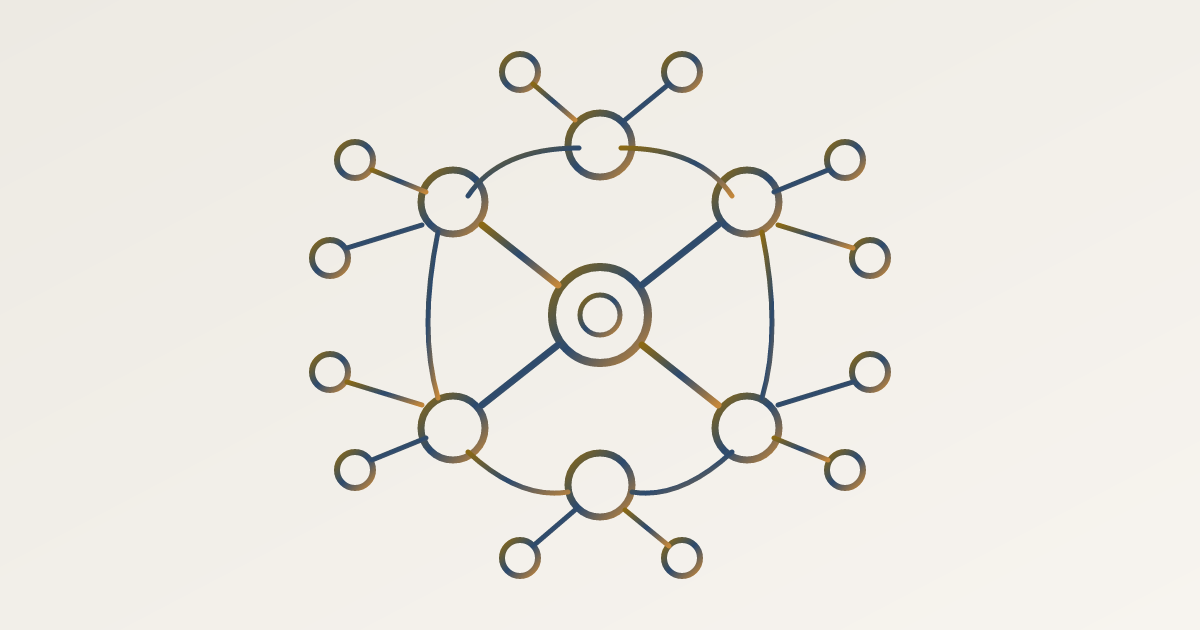
Warm path discovery extends the network beyond first-degree connections. Second- and third-degree mapping surfaces introductions that no individual partner's memory would find: the co-investor with a direct relationship to the founder, the LP whose portfolio company executive came from the target organization. These connections exist in the network already; the question is whether the firm can see them.
Outreach quality also improves when the system knows the relationship history. Rather than a generic template adapted with a name and company, outreach drafted with full context references actual shared history and reflects a real relationship. That authenticity is what makes a warm introduction land differently from a cold one dressed up with personalization tokens.
LP and portfolio management benefit from the same principle applied to continuity. Automatic surfacing of engagement patterns, relationship recency, and communication history gives IR teams institutional memory that does not reset when personnel change. The incoming partner or IR professional inherits context, not a blank slate.
A well-designed relationship intelligence tool drafts and recommends; it does not send autonomously or expose private relationship context without permissioning. The professional remains in control of every send. Automation that removes judgment from the loop is an unreliable dependency.
Alpha Watch's Rolo is built on this architecture, connecting email, calendar, LinkedIn, and messaging applications into a single queryable relationship graph that surfaces warm paths ranked by relevance and recency and drafts outreach in the user's own voice, without acting autonomously or surfacing private context outside its permissioned scope. Firms evaluating tools in this category should examine how any candidate product handles the line between institutional signal and private relationship context; the permissioning model is where most implementations either earn trust or forfeit it.
What to Look for When Evaluating Relationship Intelligence Tools (and Where Most Fall Short)
Automatic data capture is the baseline requirement, and the first place to probe. If the system still requires users to log contacts and interactions, it will decay the same way a traditional CRM does. Passive ingestion from the systems where relationships actually live, meaning email, calendar, and messaging, is the precondition for everything else being accurate.
Relationship scoring transparency matters as much as the scoring itself. A score the team can interrogate, understanding that a contact ranks highly because of three recent meetings and consistent email exchange over the last 90 days, is more trusted and more actionable than a black-box ranking. Opaque scores get ignored; transparent ones get used.
The permissioned architecture question is where many evaluations go wrong, treated as a compliance checkbox rather than a design philosophy. Fund-level information walls, deal-specific access controls, and clear rules about what relationship context is shared firm-wide versus kept private are not secondary features. They are the reason a firm's partners will allow their communications to be ingested at all, which is the reason the system has any signal to work with.
Integration depth determines the ceiling of the system's usefulness. A relationship graph is only as good as the data it can read. Tools that connect to only one or two communication channels will miss signal that lives elsewhere, and missing signal in a relationship intelligence tool doesn't produce a gap in the record; it produces a distorted ranking that looks complete.
The PE- and VC-specific fit question is the one most vendors would prefer you not ask directly. Generic CRM platforms are adding relationship intelligence features, but features layered onto a sales pipeline architecture don't change the underlying design assumption. Whether the product was built for how deal teams actually work, or adapted for them after the fact, is usually visible in the product's data model rather than its marketing materials.
Security certifications are table stakes. The differentiating question is the permissioning model: how does the tool draw the line between institutional signal and private relationship context, and what happens when that line is contested?
One question worth asking any vendor directly: when a partner leaves, what relationship context does the firm retain, and what leaves with them? That question cuts through positioning quickly. A system built for institutional memory answers it differently than one built primarily for individual users, and in a market where arriving second to a warm introduction compounds into a structural sourcing disadvantage, the difference between those two answers is real.