Email vs LinkedIn for Professional Introductions
The channel matters less than whether the recipient already knows and trusts you.
Professional introductions do not succeed or fail because of the channel carrying them. They succeed or fail based on how warm the relationship is before the message ever arrives, a fact the ongoing argument about whether email or LinkedIn works better skips past. This piece looks at why the channel question is the wrong first question, what each platform actually promises its users, and how relationship proximity, not inbox placement, decides whether an introduction gets a response.
The email-vs-LinkedIn debate is the wrong frame
Anyone who has run outreach campaigns on both platforms has lived through the same cycle: a comparison guide claims one channel outperforms the other, the numbers get tried, and the results land somewhere in the same disappointing middle regardless of which tool was chosen. That pattern is not a coincidence. Channel is the variable people reach for first because it is visible and controllable. A person can rewrite a subject line, A/B test a connection note, or buy more InMail credits. Relationship warmth, on the other hand, takes months to build and can't be manufactured on a Tuesday afternoon before a campaign launch.
The outreach environment in 2026 makes this worse, not better. It is whether anyone pays attention to the one that lands. Both LinkedIn and email are crowded for exactly this reason, and picking the "better" platform does nothing to fix a problem that originates upstream of the channel itself.
One might argue that if both channels are equally saturated, the smart move is to just split effort evenly and hope volume compensates. The question that matters is what stage this relationship is at, and which channel's unwritten rules fit that stage. Everything that follows in this piece builds from that reframe.
What each channel's social contract is
LinkedIn and email ask different things of the person reading a message, and ignoring those differences damages an introduction before the recipient gets past the first line. The platform's implicit agreement with its users is low-pressure: a message there should be easy to accept or easy to ignore, with no real cost either way.
That shapes what a good LinkedIn introduction looks like in practice. Its first job is not to pitch anything, but to read quickly and earn permission for a longer conversation later. The platform also hands the sender something email cannot replicate on its own: the recipient can see the sender's profile, work history, mutual connections, and shared groups the instant the message arrives. That visible context builds a kind of instant credibility a cold email from an unfamiliar name simply doesn't carry.
Email runs on a different contract. In situations with real stakes, hiring decisions, vendor selection, partnership terms, budget sign-off, email creates the paper trail those situations require, while a LinkedIn message sent for the same purpose tends to get buried in a tab nobody reopens.
The mistake that breaks both channels at once is copying the same message into each. The mismatch itself tells the recipient something about the sender, and what it tells them is that the message wasn't built with any particular channel or reader in mind. That signal works against the sender no matter how warm the underlying relationship happens to be.
Where Each Channel Performs Best
Each channel earns its reputation through real structural strengths, and each one hits a ceiling that no amount of clever formatting will lift. LinkedIn's advantage starts with the context it hands over automatically. For a first move toward someone with no prior relationship, LinkedIn tends to be the right starting point because it's built for research and early familiarity, not for closing anything.
But LinkedIn's volume is capped in a way email's never is. Recipients have also built up a defense against the platform's own saturation: a quick scan of the opening line, and if it reads like a pitch, the message gets archived before the second sentence. That reflex has only gotten sharper as more senders lean on templated outreach.
Email's advantages run almost exactly opposite. Once a relationship already exists and the ask is specific, email is usually the right vehicle, because the channel's own contract supports exactly that kind of detail.
Its ceiling appears in a different place. Senior professionals in enterprise, finance, and legal carry close to zero patience for a message that signals the sender skipped basic homework.
Put together, the strongest outreach strategies use each channel for the job it's actually built for: LinkedIn to build early familiarity, email to carry the specific ask once that context is in place. But sequencing the two channels well still runs into the same ceiling discussed throughout this piece. A well-sequenced multi-channel approach still depends on a relationship that already exists; it can't manufacture one that doesn't.
Why relationship warmth determines whether an introduction lands
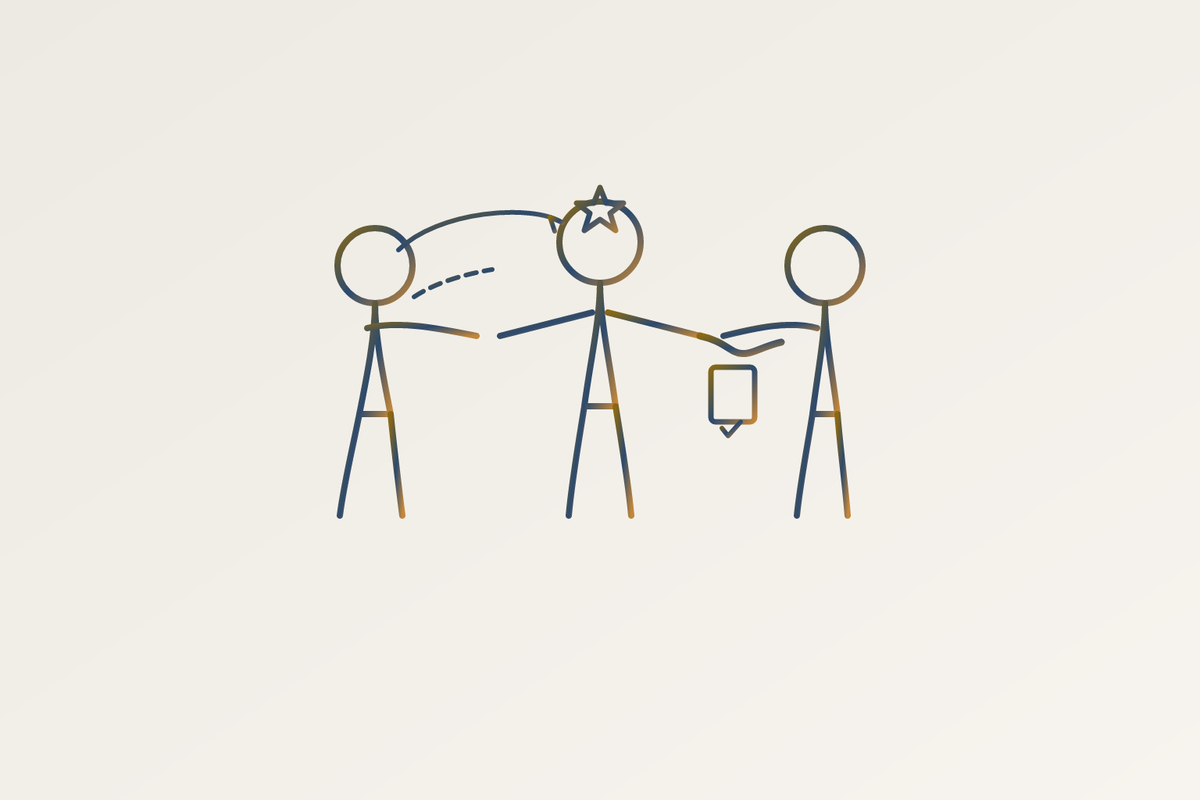
Warmth outperforms every channel variable combined because it changes something no channel can touch: what the recipient already believes about the sender before reading a single word. A cold message, however well formatted, arrives with the recipient's guard fully up. A warm one arrives with that guard partly lowered already, because someone the recipient trusts has, in effect, vouched for the sender simply by being the connective thread between them.
That pre-screening effect is information a channel cannot supply on its own. It also sidesteps the deliverability problems that plague cold outreach on both platforms. A warm introduction doesn't need to out-clever a spam filter or beat LinkedIn's scan-and-archive reflex, because the recipient already recognizes who's writing and why. The filtering problems described in the previous section apply almost entirely to messages sent without that recognition in place.
Not every warm introduction carries equal weight, either. An introduction from someone whose judgment a recipient deeply respects functions differently than one from a loose acquaintance the recipient barely remembers. The person in the middle matters: a genuine bridge, someone who actually knows both sides and is respected by both, moves an introduction forward, while a weak connector with nothing but good intentions cannot.
One might raise a fair objection here: not everyone has access to warm introductions, and treating them as the default strategy risks reinforcing exactly the kind of access inequality that already shapes who gets into rooms and who doesn't. That objection deserves a real answer. The claim being made here is not that cold outreach is useless or that a professional without a warm path should simply wait. The claim is narrower and more specific: holding the message constant, relationship proximity is the single variable with the largest effect on whether that message gets a response, and the sound long-term strategy is to build that proximity deliberately over time rather than treat it as something a person either has or doesn't. A personalized cold message from a total stranger still tends to underperform a generic message from someone whose work the recipient has been reading for weeks. Familiarity and credibility are built before outreach ever starts, not during it.
How to read relationship proximity before choosing a channel
Choosing the right channel starts with an honest look at where a relationship actually sits, not where a sender wishes it sat. Four rough stages make the diagnostic workable.
No prior contact and no mutual connection means the relationship is cold no matter which platform carries the message. This is the stage where the channel debate is most misleading, because neither email nor LinkedIn fixes an absence of warmth; both channels are simply delivering the same cold message through different pipes.
An established relationship paired with a specific ask also belongs in email, where the channel's capacity for detail and its built-in paper trail support exactly that kind of concrete request.
That maps onto a simple heuristic: start softer on LinkedIn, get specific in email. LinkedIn is where a relationship warms up; email is where the actual ask gets made. Switching from one to the other signals something about the relationship that is worth reading carefully. And in enterprise, finance, and legal specifically, senior professionals have little patience for channel mismatch; reaching them on LinkedIn before any relationship context exists tends to read as presumptuous in those industries more than in most others.
Why most professionals are sitting on unseen warmth
The limiting factor for most professionals chasing warm introductions is rarely the absence of a warm path. It's not being able to see the paths that already exist. Relationship history, who knows whom, how recently, how substantively, sits scattered across email threads, old calendar invites, LinkedIn connections, and a handful of messaging apps, with no single place pulling that picture together.
That scattering has real institutional cost. Generic CRMs and contact lists were never built to answer the question that actually matters in this situation: who inside this firm already has the warmest path to this specific target? They're built to store contacts, and they lack any way to surface which of those contacts represents real relationship proximity.
The cost is paid at exactly the wrong moment. A professional preparing to reach a target spends real time deciding between email and LinkedIn, debating templates and subject lines, while a more valuable question goes completely unanswered: does anyone inside this network already have a first-degree relationship with this person? That answer usually exists somewhere in the firm's collective history. It stays invisible to the person who needs it because the systems holding that history were never designed to surface it.
How relationship intelligence tools surface warm paths
If the real problem is visibility rather than reach, the fix is a tool that makes existing relationship warmth legible before anyone sits down to choose a channel. Rolo, built by Alpha Watch, is built around exactly that question: who in this network already has the warmest path to this target?
Rolo connects the systems where professional relationships actually live, email, calendar, LinkedIn, messaging apps, and turns that scattered history into a single relationship graph a person can query directly. It isn't built to replace a CRM. The design target is specific: an investor sourcing a deal, a founder trying to reach an OEM partner, a BD operator who knows the right introduction exists somewhere inside the firm but has no way to locate it.
Other tools occupy nearby parts of this space. Affinity is widely used in venture and private equity to track relationship history and deal flow, pulling in some activity automatically from email and calendar, though its focus sits more on deal pipeline tracking than on surfacing relationship proximity across a whole firm's network. Clay aggregates contact data from a range of sources and supports enriched outreach workflows, strong on assembling and enriching data, though less oriented toward answering the specific question of who already has the warmest path to a given target.
What ties these tools together is a shift away from the old CRM model of passive contact storage and toward something closer to active relationship intelligence. The tool's job is to surface the path. Whether to walk it, and how, stays a decision the professional makes.
Putting it together: matching channel to relationship stage in practice
Channel choice belongs at the end of this process, not the beginning. The order that actually works runs: map where the relationship stands, find the warmest available path or introducer, and only then pick the channel that fits what that relationship stage can support.
In practice, that sequence looks like four steps. First, check whether a warm path to the target already exists, inside a personal network, a colleague's, or through someone who knows both sides. Second, if a warm path exists, route through whoever has the warmest relationship available, regardless of which channel feels more convenient. Third, pick the channel based on what that relationship stage's unwritten rules actually support: LinkedIn for early familiarity and a soft first move, email once contact is expected or the ask has gotten specific. Fourth, shape the message to fit the channel it's traveling through: brief and low-pressure on LinkedIn, direct and detailed in email.
Channel should follow the relationship, not lead it. Professionals who pick the platform first and think about the relationship second are solving the problem in the wrong order, and no amount of polish on the message fixes that sequencing mistake. The real constraint was never which channel to use, but whether the relationship underneath the message is strong enough to cut through everything else competing for a recipient's attention, a problem that tools built to map existing relationships, Alpha Watch's Rolo among them, are designed to make visible before a single draft gets written.
Both channels have genuine, well-documented ceilings. LinkedIn's InMail credits cap out around 50 per month, and email now runs into spam filters sharp enough, and recipients skeptical enough of templated outreach, that even a carefully built message can struggle to land. Professionals getting the best results aren't the ones who've mastered InMail mechanics or deliverability tricks: they're finding the warm paths that already exist somewhere inside their own network and matching the channel to whatever stage that relationship has actually reached.
The durable edge was always the slow, deliberate work of building relationship proximity over time, paired with the ability to actually see and use the warm paths a network has already built, whether or not anyone's been keeping track of them. The most valuable introductions come from real proximity, not clever formatting, and making that proximity visible is the work actually worth doing.