Personal CRM Setup for Angel Investors and Early-Stage Founders
Warm introductions matter more than contact lists when raising capital early.
A personal CRM setup for angel investors and early-stage founders should keep relationship memory alongside the contacts it stores. Its value lies in showing the right person to reach, the warm path to them, and the context that makes an approach timely. That requires building around relationship signals rather than fields and pipelines, while keeping the professional in control of every introduction and message.
Why warm introductions structure early-stage dealmaking the way they do
An investor who has never met a founder must make a high-conviction decision with incomplete information. An introduction from a trusted third party compresses that uncertainty because the investor has grounds for judging the intermediary’s recommendation. A cold message can share information, but it cannot draw on that same trust. The introduction therefore changes how the opportunity reaches the investor.
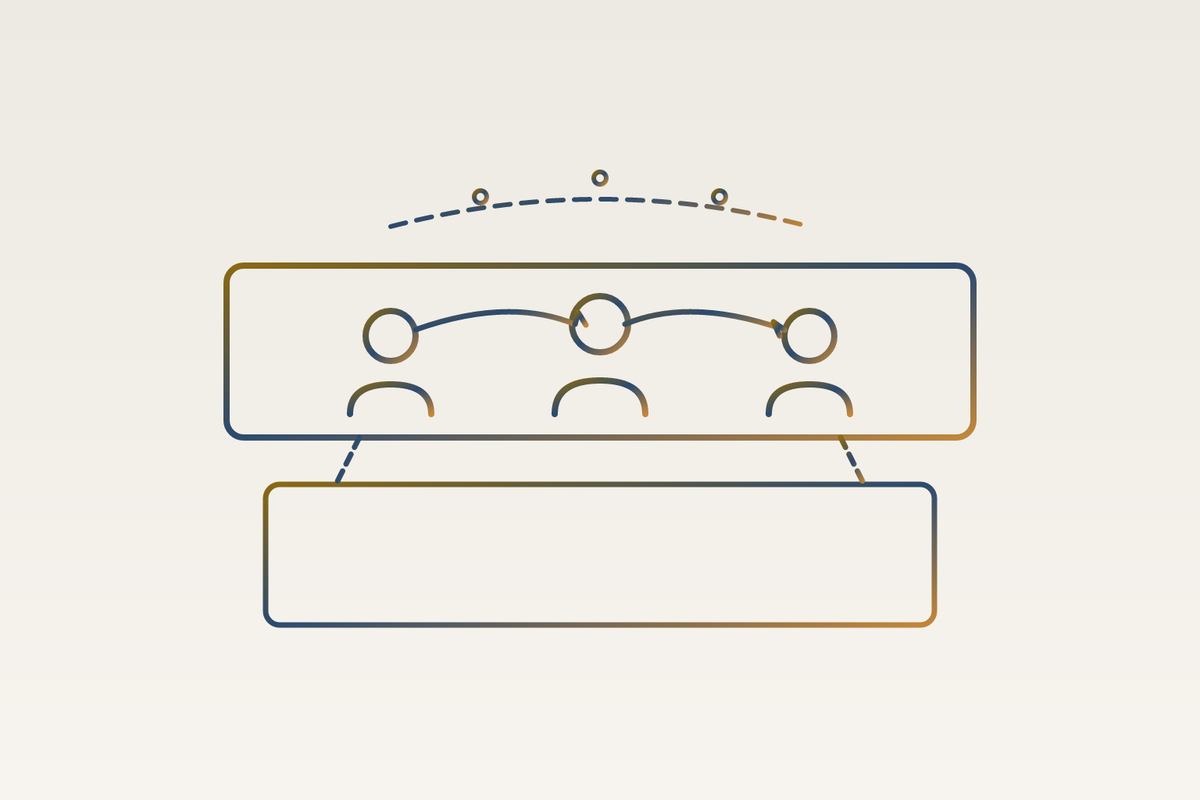
This mechanism is especially clear in tier-two deal flow, which comes through trusted sources including other investors, accelerator directors, attorneys, and accountants. These sources can pre-filter opportunities because they already understand an investor’s thesis. For founders, the bottleneck is consequently not finding investor names but having warm-intro coverage of the right network before a raise opens. For angels, sourcing is the upstream work that shapes the quality of the opportunities available for review. By the time a pitch deck arrives cold, much of the relationship-based competition has already happened.
What a relationship memory system actually needs to do, as opposed to what a contact database does
A contact database records who someone knows, whereas a relationship memory system helps determine whom to reach now, how warm the path is, and what context matters before making contact. Details such as title, company, and email cannot answer those questions on their own. Interaction recency, shared connections, previous help, and signs of a cooling relationship can.
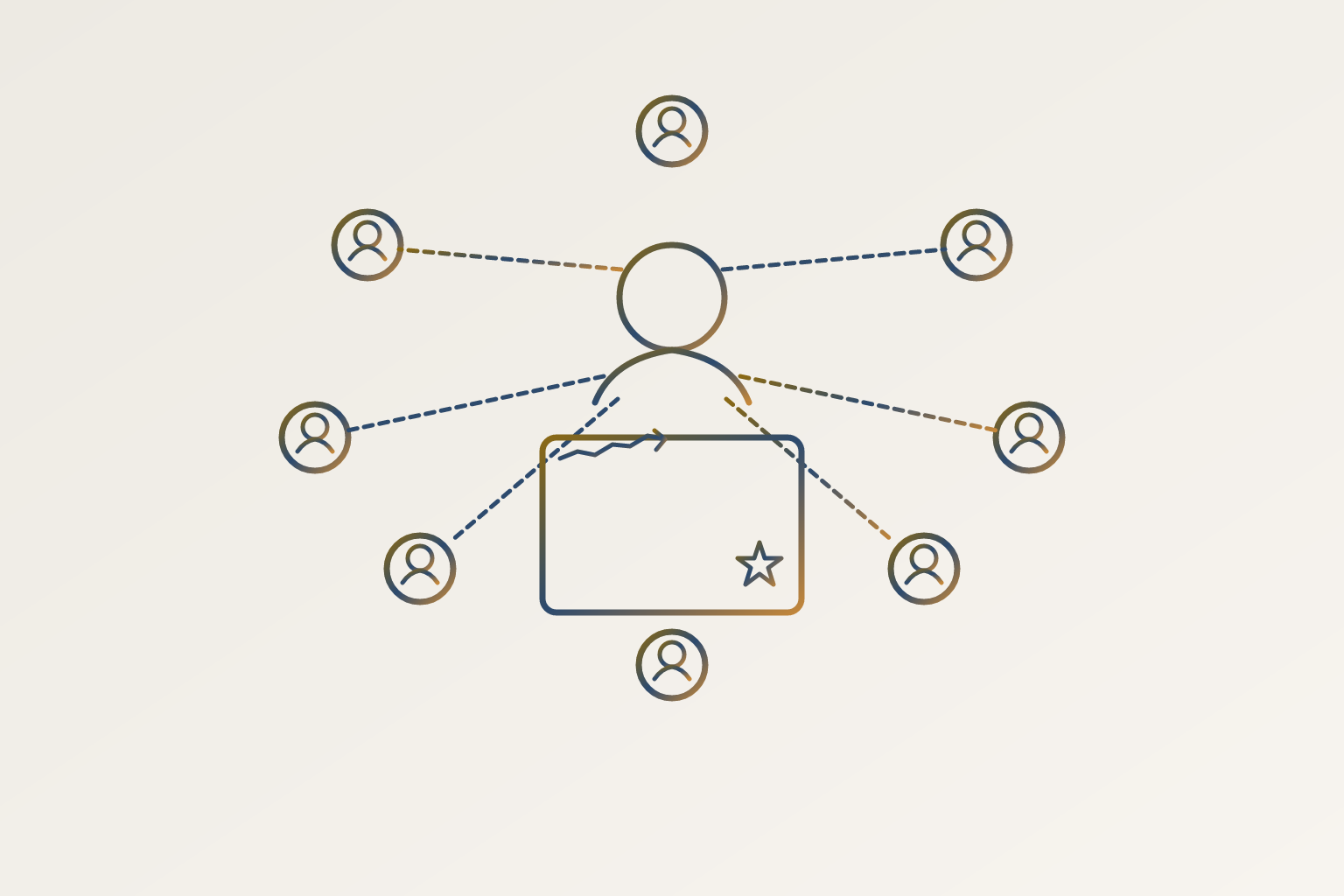
That distinction also changes the underlying structure. A single person can be a founder under evaluation, an advisor to a portfolio company, a potential co-investor, and a future LP. Accounts and pipeline stages fall short when one person has several of those roles. A queryable relationship graph instead makes connections, their strength, and the paths between people available for use. Rolo is one concrete example of this architecture, built around a firm-wide relationship graph that surfaces warm paths and ranks connections by relevance and recency.
The next constraint is how that memory stays current. Manual entry assigns the most upkeep to partners and founders whose time is scarce and whose context is especially valuable. When someone has to log every meeting and email, things get left out until the record can no longer be trusted. A system can have detailed contact records yet fail at the moment someone needs to make an introduction. Useful relationship memory must rely less on people entering data by hand.
The signals that actually belong in a relationship memory system for deal-driven users
First, assess whether a connection is still warm enough to use. Interaction recency is the most important signal because historical familiarity is not the same as present access. A relationship that was warm eighteen months ago but has had no contact since is cold outreach with history. Communication frequency adds context, but it does not remove the need to know when the last exchange happened. A setup that foregrounds titles and company names can conceal this distinction behind apparently complete records.
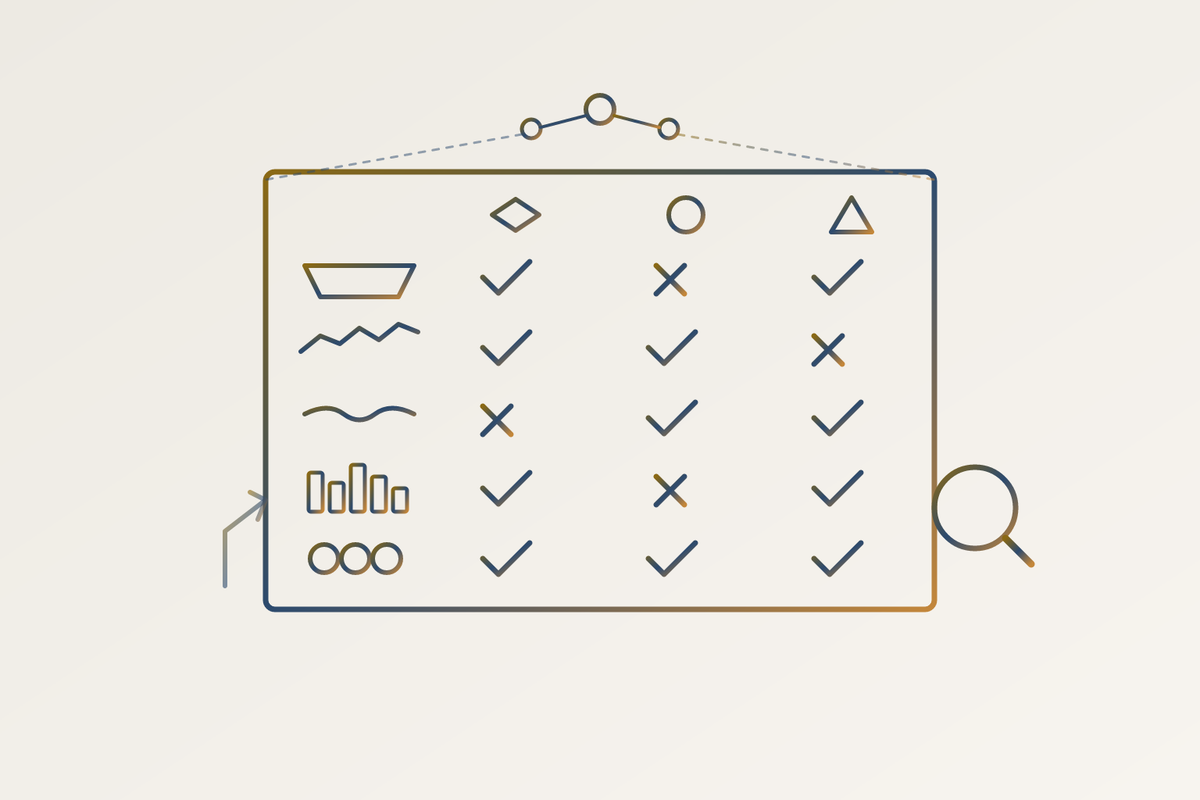
Next, identify who can carry a credible introduction. Second- and third-degree mapping extends the view beyond direct contacts to the people those contacts know. For angels, useful paths can run through co-investors, portfolio founders, accelerator program managers, attorneys, and accountants. These people may encounter opportunities earlier or be able to vouch in directions the angel cannot reach directly. The relevant signal is not simply that two people are connected, but whether a trusted mutual connection exists.
Once a path is visible, the question becomes what would make an approach meaningful. What people have discussed, how they have helped, and what they have promised give a warm introduction the context that keeps it from feeling like a transaction. Relationship health shows how things change over time through overdue follow-ups, contacts who used to be active but have gone quiet, and connections that are cooling. These signals address the gap between conversations, where a deal can lose momentum without a clear decision. Their purpose is to recover the next meaningful action.
How institutional relationship data goes dark inside firms that do not treat it as a shared asset
A firm can miss a deal even when a partner already knows the founder. It can also leave a portfolio company waiting for a promised introduction or miss a co-investment opportunity because the relevant relationship is invisible to colleagues. In each case, the firm lacks access to knowledge it already holds. An avoidably cold follow-up is the practical cost of relationship data that cannot be found.
Angel networks, early-stage funds, and founder communities face this problem when context lives in partners’ heads, scattered notes, and neglected CRM fields. The people with the richest networks often have the least time to document them, so institutional memory erodes through ordinary work. What looks like a collective network is then a collection of silos. As sourcing competition pushes investors toward proactive engagement with promising founders, that fragmentation becomes more costly.
A graph that can be queried across a team changes what the firm can discover. It can surface a warm path that no individual partner would have thought to check. Rolo helps the firm solve this by letting the team use institutional relationship signals while keeping personal context private. The operational asset is a usable map of the firm’s relationships.
What the purpose-built tools for relationship-driven deal flow actually do differently
Purpose-built relationship intelligence tools respond to the mismatch between account-based CRM structures and deal-driven work. They offer passive capture, second-degree path mapping, relationship health signals, and permissions that keep personal context separate from what the firm knows. Capture keeps the memory current, mapping makes it searchable, and health signals make it timely. People will contribute to the memory only if permissions protect their personal context.
Affinity automatically records every email and calendar interaction across a firm, maps how strong relationships are, shows warm introduction paths, and flags deals that are cooling. It is used by thousands of firms. In July 2026, Affinity launched Ascend, introducing three agents, namely Meeting Prep, Warm Intros, and Data Update. 4Degrees, built by former investors, quantifies each team member’s connection to a target using real interaction data. It also surfaces second-degree routes through co-investors, advisors, and portfolio founders that a contact list alone would not reveal.
Intapp DealCloud serves private capital and investment banking with prebuilt data models, market intelligence integrations, and Intapp Assist AI to centralize deal flow. Its tools for compliance include role-based permissions and audit trails. Carta acquired ListAlpha, an AI-powered CRM and relationship intelligence platform, in March 2026 and launched Carta CRM for private capital firms. Its distinct connection is between CRM, investor relations, and live fund accounting data, including IRR, TVPI, DPI, and carry calculations. Rolo’s design emphasis is permissioned firm-wide relationship memory, with relevant, recent warm paths surfaced without exposing private context or sending autonomously.
How to set up a relationship memory system that will still be useful six months from now
Integrate the systems where relationship data already lives, including email, calendar, and LinkedIn, before defining fields or pipelines. The data needs to flow before the system can surface anything useful. This order also keeps setup focused on minimizing the maintenance surface. The setup should remove continuous manual upkeep as a failure point.
Next, choose the signals that help people make decisions. For angels, these usually include warm paths to target founders, how recently they have been in touch with co-investors and referral sources, and the health of relationships at portfolio companies. For founders, the priorities are warm-path coverage to target investors, second-degree connections through advisors and recent raisers, and follow-up timing on active conversations. These are different workflows, even when they involve some of the same people.
Then make those signals prompt action. The system should flag a follow-up that is due, a warm path just found, or a connection that is cooling without someone having to remember to check a contact list. Set explicit rules for what going cold means, whether that is no contact for weeks or a few months, and make relationship health alerts a primary output. For a firm-level setup, establish which signals are shared and which remain private before adding team members. That decision belongs in the setup sequence because trust cannot be repaired merely by adding a permission setting later.
The privacy and permission architecture that determines whether a firm will actually trust the system
Pooling relationship intelligence creates a sharper question than whether a tool is convenient. A colleague’s private email appearing in a shared system is a breach of expectations about who could see it. AI tools inherit the permissions of the users who deploy them, so misconfigured access can bring restricted information into view. In a high-trust professional setting, one visibility failure can damage relationships that took years to build. Convenience cannot compensate for that risk.
A firm may need to know which partner has a connection to a target without seeing a private conversation, a favor owed, or a sensitive referral. Permissions therefore need to be enforced in real time at the system level across every data pipeline, rather than left as settings a user can accidentally override. For enterprise and institutional deployments, audit trails must make significant actions reconstructable. That includes which data was accessed, which model version was used, and exactly what was executed.
Data processing and training practices belong in the same review. Questions about where data is processed and whether it trains shared models are baseline expectations. For an individual angel or founder, the practical version is to ask whether relationship data trains shared models and whether the tool’s access can be audited before connecting a primary inbox. Whatever the deployment size, trust is a prerequisite for participation, and participation is what gives the memory system value.
Where the warm-intro sourcing model has real limits, and what to do about them
A mutual connection who barely knows either party contributes little social proof, regardless of how neatly a tool maps the route. The risk of AI-assisted mapping is therefore not simply that warm introductions lose effectiveness. It is that weak introductions become easier to produce and mistake for credible ones. The tool can identify a path, but a person must judge whether the relationship can bear the request.
There is also a signaling problem when platform-routed introductions become systematic. Some investors see heavy reliance on them as a sign that someone knows few people personally and give more weight to introductions from people they really know. The regulatory distinction adds another consideration because Reg D 506(b) prohibits public solicitation, while 506(c) permits it. Some investors read public solicitation as a reason to question network quality, an interpretation based on their own judgment. Neither a mapped path nor the route by which a deal arrives settles its merits.
The practical resolution is to use the system to find the path, then take the conversation off it. Relationship intelligence can recover context and reveal an existing connection, but the professional determines the quality of what happens next. AI should draft and recommend, and send only when a person has made a deliberate choice.