Preventing Duplicate Outreach to the Same Contact Across a Team
Real visibility into who contacted whom and when stops duplicate outreach before it happens.
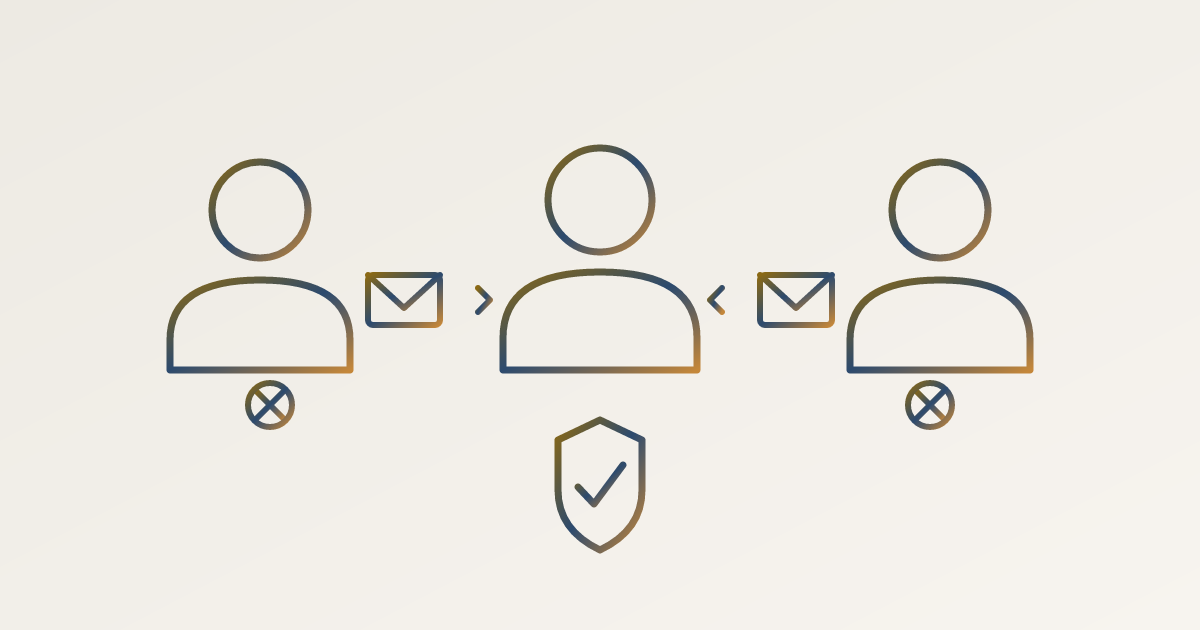
A firm's relationship data lives in a dozen disconnected places, and nobody sending a message can see the whole picture before they hit send. That's the actual problem. The double-emails, the burned warm intros, the account manager who finds out three weeks late that a colleague already grabbed coffee with the same founder: all of it traces back to that one gap.
The usual fix targets people instead of the system. Tell the team to check the CRM before reaching out, add a "claim before you contact" line to the playbook, run a dedup sprint every quarter, call it handled. Nothing sticks, because the fix assumes the information needed to avoid the collision existed somewhere and someone just forgot to look. Most of the time it never existed in usable form at all.
Picture an ordinary Tuesday: one partner replies to a two-year-old email thread from her personal Gmail, a colleague on the deal team fires off a templated follow-up because the contact showed up on a sequencing list, and a third person, working a totally different angle, sends a LinkedIn request that same week. Each of them is acting reasonably given whatever system sits in front of them, and none of them can see what the other two are doing.
The tool stack doesn't help much either. A prospecting database, a separate sequencing tool, a CRM that's technically the system of record, LinkedIn activity that never syncs anywhere: suppression logic doesn't cross those boundaries, so nothing stops the second or third touch from going out. Industry estimates put CRM data duplication and staleness somewhere around 20 to 30% over time, which is more than enough to distort whatever funnel view a team thinks it's working from.
"Check the CRM first" creates its own false sense of safety, and this is the part that gets missed. A rep checks, sees nothing, assumes the coast is clear, sends the email. Except the record never got logged in the first place, so what looked like due diligence was really just checking an empty drawer. That's a visibility gap, and telling people to look harder won't fix a system with nothing accurate to show them.
How contact ownership gets ambiguous at the firm level
Most firms run one of two ownership models, though few of them ever sat down and picked one on purpose.
Contact-level ownership assigns a person to an individual: this partner owns this contact, done. Fine for transactional work, but it leaves a hole at the company level, since someone else on the team can reach a different person at that same account without breaking any stated rule. Account-level ownership closes that hole by putting one person in charge of every touchpoint into a company. That matters more than it sounds when a single bad impression can sour a whole relationship, or when a long sales cycle drags in five or six stakeholders who all talk to each other in the same Slack channel.
Almost nobody actually decides which model applies where. Ownership gets inferred instead, informally, from whoever spoke to the contact most recently, or whoever's quietly been holding them in a personal inbox, or whoever left the last CRM note eight months back. It resembles a policy without functioning like one, and it tends to hold together right up until it doesn't.
High-trust environments make this worse, oddly enough. A venture partnership might have one contact who's simultaneously an LP, a portfolio founder from three funds back, and a potential acquirer for a company currently raising. Three partners could be holding three different threads with that same person, each legitimate on its own, none of them aware the others exist. When partners run their own books with zero visibility into a colleague's relationships, the firm's collective network stays in pieces, and the contact feels that fragmentation directly. Nobody, including the firm itself, can tell them who the right person to talk to actually is.
An ownership rule by itself won't fix any of this. Ownership only means something once the relationship history behind it is visible to more than one person before anyone picks up the phone.
What relationship data looks like when it's trapped in silos
A typical firm's relationship data lives scattered across individual email inboxes, calendar histories nobody bothers to export, LinkedIn connections locked to one person's account, CRM records updated in bursts and then ignored for months, and message threads spread across three different apps. Somewhere there's at least one spreadsheet somebody threw together in a hurry for one specific ask, never opened again after that.
DATAVERSITY's 2024 Trends in Data Management report put data silos at the top of the list of barriers enterprises name when trying to get value out of their own information, with 68% calling it the primary obstacle. That's structural, and it's getting worse as the tool stack keeps splintering into more single-purpose apps that were never built to talk to each other in the first place.
When systems don't talk to each other, a person becomes the bridge, and that should worry any firm relying on institutional memory instead of infrastructure. The partner who "just knows" which founder spoke to whom last quarter, the executive assistant who remembers which LP had coffee with which associate two Aprils ago: that knowledge lives in someone's head, and a head is one resignation letter away from walking out the door with it. Employees reportedly burn something like 12 hours a week chasing down data trapped in silos. In a relationship business, a good chunk of that time goes toward reconstructing contact history that should have been sitting there the whole time.
The data usually isn't gone. Years of email threads and meeting notes and introduction chains typically still exist somewhere, but the problem is timing: none of it surfaces in the thirty seconds before someone decides to reach out, which happens to be the only moment it actually matters.
What a firm-wide relationship layer needs to make visible before outreach happens
Cut through everything else and it comes down to two questions, and both need answers instantly, from anyone on the team, before a message goes out. Who at this firm already knows this person, and how recently, and how substantively? Has anyone touched this person in the last however-many days, through any channel at all?
A CRM answers those questions exactly as well as people remembered to log their activity, and that bar sits lower than it needs to be almost everywhere you look.
A relationship layer built to actually solve this does a few things differently. It connects to where relationships already live, email, calendar, LinkedIn, messaging, and pulls activity automatically instead of waiting on someone to type it in after the fact. It shows recency and strength of connection alongside whether a record technically exists somewhere in a database. It makes the whole team's history queryable in plain language, so a rep can ask who here has the warmest path to this person and actually get an answer. It flags active or recent outreach across every channel before anyone sends something new, so the second touch never goes out blind.
RevOps thinking offers a decent framework here, built around four control points: ingest, match, route, suppress. All four steps only function if the underlying data is complete and current, though, which requires automated capture rather than another reminder email asking people to please log their activity this time, we mean it. The real target is deduplicating intent before the send goes out, a meaningfully different problem than deduplicating records after the fact.
Affinity has built something close to this for venture firms, and Rolo applies a similar model more broadly across investors, founders, and operators. Pull scattered contact history into one queryable graph, surface the warm paths, flag the recent touches, let the team see all of it before anyone acts.
Why warm path visibility matters beyond avoiding collisions
Avoiding collisions is the easy part to sell internally. The bigger prize sits right next to it: the same layer that stops duplicate outreach also surfaces the best way into a contact, and that path almost always runs through a colleague's existing relationship rather than a fresh cold approach.
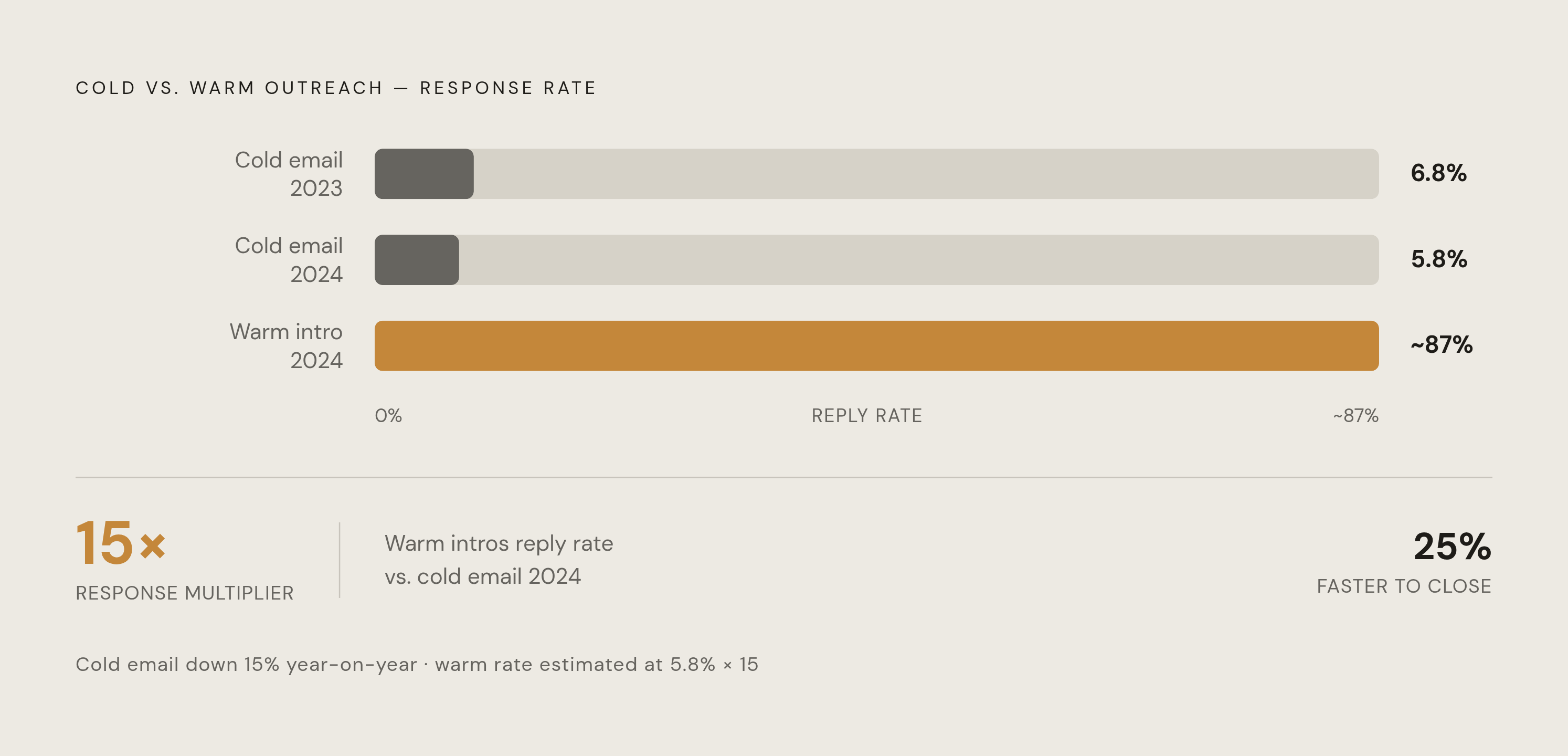
The cold outreach numbers make the stakes concrete. Across a dataset of 16.5 million cold emails, reply rates dropped from 6.8% in 2023 to 5.8% in 2024, a 15% year-on-year decline. Warm introductions generate response rates something like 15 times higher than cold outreach by comparison, and Affinity's relationship intelligence data shows deals close 25% faster when a warm path gets used instead of a cold one.
So why doesn't everyone just default to the warm path? Ask almost any experienced dealmaker and they'll tell you, without much hesitation, that a warm intro beats a cold email every time. The catch is operational: the warm path isn't visible until somebody goes looking for it, and going looking manually, across a dozen colleagues' inboxes, eats time nobody has to spare. Give a team instant visibility into who holds the warmest relationship with a target, and they can route the outreach to that person with the right context, instead of firing off a cold email from the wrong desk while the real connection sits dormant three offices over.
It is also worth considering that preventing duplicate outreach and activating warm paths share the exact same underlying requirement. Both need the firm's collective relationship graph legible before anyone moves.
The trust and privacy constraint that any firm-wide relationship layer must respect
But what if making all this visible means exposing things that were never meant to be shared? It's a fair worry. Relationship data is personal by nature, and turning it into something collectively visible raises real questions about who gets to see what, and how much of it.
In investor and founder circles especially, some relationships carry genuine sensitivity: an LP conversation nobody's ready to talk about openly yet, an early-stage founder quietly testing the waters on a raise before any announcement goes out, a potential acquirer sitting inside a process that's supposed to stay quiet for another six weeks. Exposing all of that to an entire team, unfiltered, just trades one kind of damage for another.
The workable approach shares signal alongside restraint on content. A colleague can see that a warm connection exists, and roughly how strong it is, without ever seeing the substance of what got said in that private thread. Access needs permissioning by role and context; it shouldn't fly open by default just because the infrastructure now makes it technically possible to see everything.
There's a related line worth drawing around AI here. AI can draft, recommend, flag, surface the warm path, point out the recent touch, suggest who the right introducer might be, but sending stays with a person, and nothing should go out without someone explicitly signing off first. Enterprise relationship intelligence is as much a trust and compliance question as it is a technology one, and in high-trust environments like investor networks, permissioned data architecture is the baseline before anyone adopts any of this at all. Rolo builds around exactly that line: relationship signals become useful across the whole team, while the private context underneath stays permissioned and out of view unless someone's actually supposed to see it.
What changes operationally when the firm's relationship graph is visible before outreach
Take a typical scenario and run it two ways. The gap between them is where this whole argument lands.
First way: someone on the team wants to reach a contact, searches the CRM, finds either nothing or a record that's five months stale, makes a judgment call, sends the email. Two weeks later they learn a colleague had an active thread with that exact person the entire time. Awkward on a good day, damaging on a bad one.
Second way: before sending anything, that same person queries the relationship graph and sees a colleague met this contact three months back, exchanged two substantive follow-ups since, and holds a genuinely warm relationship with them. They route through that colleague instead of going in cold. Relationship intelligence platforms report saving dealmakers upward of 200 hours a year just by automating the data capture that used to happen manually, on the rare occasion it happened at all.
Ownership arguments get simpler too, once the history sits visible instead of assumed. Account-level versus contact-level ownership stops being a policy debate that never quite resolves in a Monday meeting, and turns into a visible fact sitting in front of everyone: this person's already in conversation with this partner, so nobody else reaches out without looping them in first. The cultural shift that follows, people coordinating instead of colliding, is real enough, but it's downstream of the visibility. People don't step on relationships they can actually see.
The firms that handle this well stop dodging awkward double-emails from two associates in the same week and start turning a network that already existed, scattered across inboxes and calendars and old forgotten notes, into something the whole team can actually use. The warm paths were there the whole time. What was missing was a way to see them before the outreach went out, not two weeks after the damage was already done.