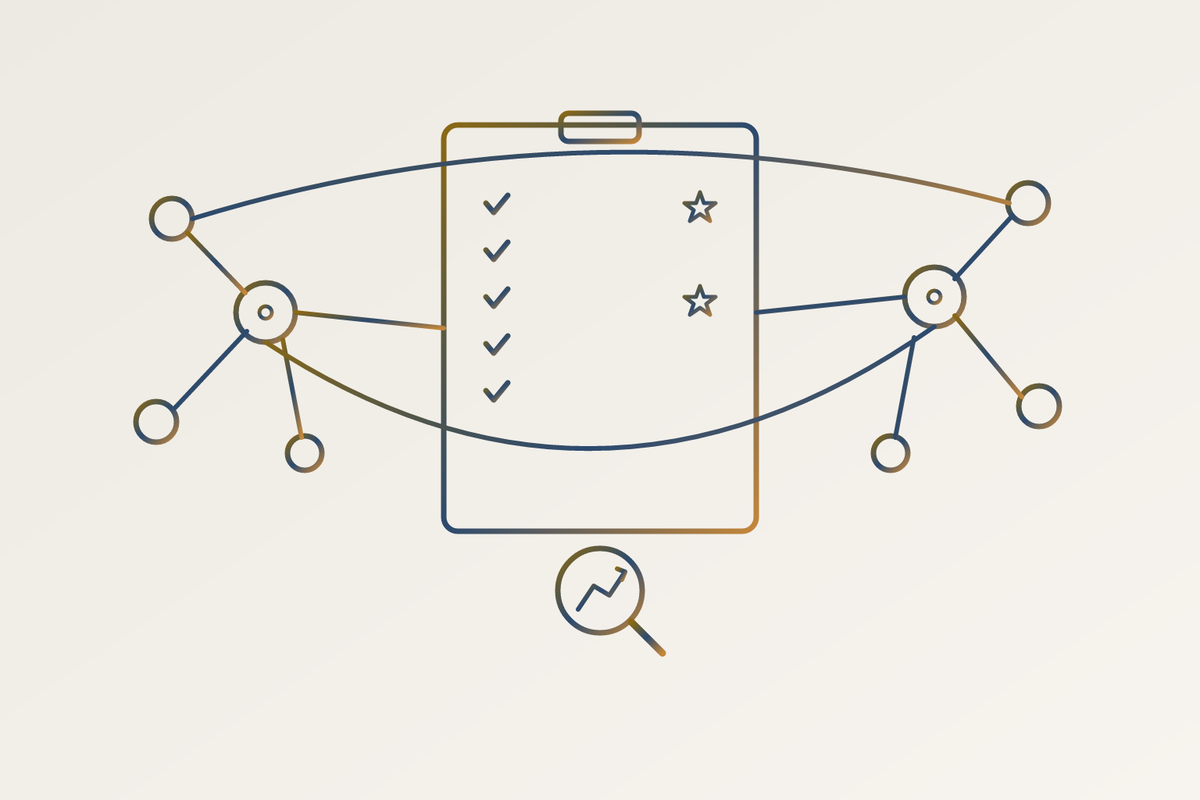
Relationship Intelligence Software Compared to Research Ops Stacks
Relationship intelligence watches your contacts; research ops watches the market for ready buyers.
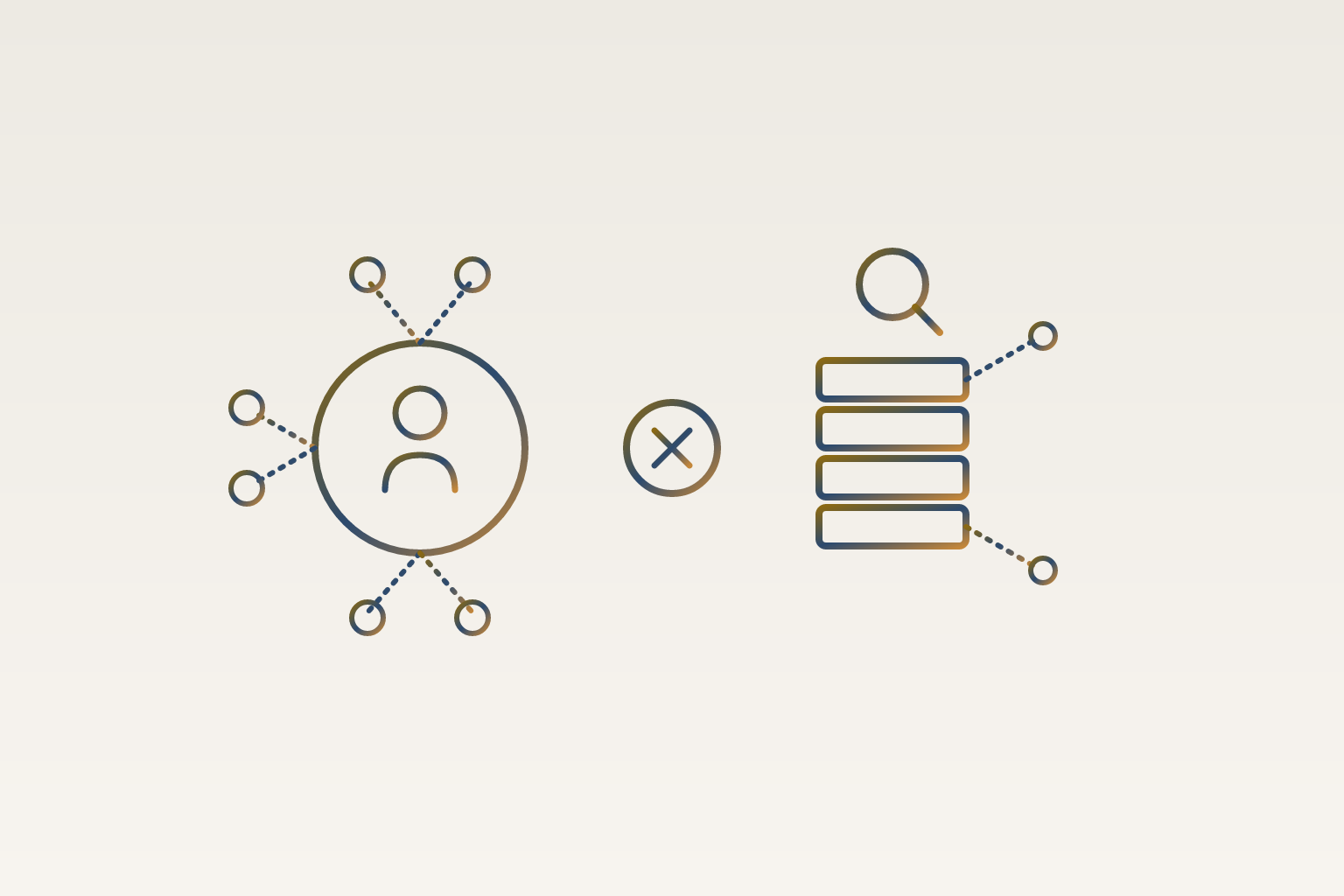
Relationship intelligence software and research ops stacks both claim to tell a sales or deal team where to point their attention next, but they get there by reading completely different data. One watches who you already talk to. The other watches the market for signs that a stranger is ready to buy. Confusing the two in 2026, when both categories have matured into distinct software markets with distinct vendors, costs buyers real money and real time.
Why these two paradigms feel interchangeable but aren't
Anyone shopping for a sharper intelligence stack this year will find both categories pitched in nearly identical language: better targeting, warmer outreach, higher conversion. That shared marketing vocabulary causes the confusion, because the mechanisms underneath have almost nothing in common. Relationship intelligence software reads the communication a firm already produces, emails sent, meetings accepted, CRM notes logged, and turns that exhaust into a map of who knows whom and how well. Research ops stacks do something else entirely: they pull in signals from outside the firm, a company's hiring patterns, a prospect's content downloads, a technology stack change, and use those signals to guess who is close to a purchase decision. One tool answers who do we know. The other answers who is ready. If you buy a research ops platform expecting it to surface warm paths through existing contacts, you will be disappointed, and if you buy relationship intelligence software expecting it to flag in-market accounts it has never touched, you will have the same problem in reverse. The choice between them is not a matter of preference or budget tier. It shapes which workflows a team can run and which questions it can answer on a given Tuesday morning, and the next sections of this piece will spend most of their time unpacking how each one works, where each earns its keep, and what a buyer should ask before signing a contract.
How relationship intelligence software builds its map
The mechanism behind relationship intelligence software is passive capture, not database lookup. A platform in this category connects to a firm's email and calendar system, usually Google Workspace or Microsoft 365, along with the CRM, and from that point forward every sent email, every reply, every accepted meeting becomes a data point without anyone having to type it in. ZoomInfo's own framing of this category describes it as a three-step sequence: raw signal capture across frequency, interaction history, and network topology; AI-driven scoring and enrichment of those signals; and finally actionable output in the form of relationship strength scores and warm introduction paths. The scoring step is where the real judgment happens. Algorithms weigh how often two people talk, how recently they last spoke, and whether the exchange goes both ways, and because relationships fade without upkeep, these scores decay over time just as the underlying connections do. A colleague who has swapped frequent, recent emails with a target company's CFO will rank well above a colleague who shook that same CFO's hand at a conference back in 2023. Once a deal team identifies a target account, the platform can answer a question no spreadsheet can: who at this firm already knows someone there, and how strong is that connection right now? Some platforms extend this further by watching for job changes, so a contact who moves to a new company becomes an automatic new door into that company. So what results is a living network graph, not a static contact list. When a partner leaves the firm, the relationship history they built stays visible to the people who remain. So if two deal teams are quietly circling the same account, the graph surfaces that overlap before anyone wastes a week duplicating outreach. Rolo, built by Alpha Watch, runs on this same passive-capture design: it connects email, calendar, LinkedIn, and messaging apps to build a firm-wide relationship graph that ranks connections by relevance and recency, all without manual data entry and without replacing the CRM already in place. It also keeps a person in control of every outreach decision, since it drafts messages but never sends on its own. The substance of any conversation stays private, but the fact that a connection exists becomes visible and useful across the team, and that distinction gets its own treatment later in this piece.
Research ops stacks' picture of who is ready
Research ops stacks solve a different problem, and they solve it by looking outward rather than inward. Instead of mapping who a firm's own people know, these tools aggregate external signals, firmographic data, technographic fit, buying intent, job-change alerts, engagement history, to estimate which accounts are worth calling right now. The category has split into several distinct jobs, and it helps to be precise about which tool does which one, because no single platform covers all of them. Sales intelligence platforms such as Apollo, Cognism, Lusha, and LinkedIn Sales Navigator answer the most basic question in outbound sales: who should get the call, complete with verified contact details and a firmographic profile. Apollo in particular has grown past a simple contact database, and its own materials now describe it as an AI go-to-market system spanning data, intelligence, and execution together. Account intelligence and account-based marketing tools like 6sense and Demandbase work a layer up: they score which accounts show in-market intent based on signals pulled from publisher networks and a company's own first-party engagement data. Enrichment orchestration tools, Clay being the clearest example, pull from many data sources at once to build and keep enriched records current, but Clay asks for real operational capacity from a RevOps team to build and maintain its workflows. It rewards the firms that invest in running it well. Conversation intelligence tools such as Gong analyze sales calls after they happen instead of sourcing prospects before the call gets booked. Practitioners call this the signal-to-action gap, and it is the defining operational headache across this whole category. A buying signal surfaces in one tool, then it has to travel through a separate enrichment layer, then a separate engagement platform, then a separate deliverability stack before it becomes a message sent to a real inbox. That chain often runs through four separate systems and can take 48 hours to complete, and a team stuck in that chain is at a real disadvantage against a competitor who can act on the same signal in minutes. Tools like Alpha Watch's relationship intelligence offering sidestep that gap, because they work inside relationships and communication patterns a firm already has, instead of chasing external signals through a multi-system relay. That is not a knock against research ops stacks, which do something relationship intelligence cannot: they find accounts a firm's network has never touched, catch timing a human would miss, and build org charts from data no one at the firm could have assembled by hand.
Why the warm path wins when it exists
Warm introductions outperform cold outreach by a wide margin, and firms with a strong referral motion tend to close faster than those without one, because an introduction transfers trust instantly in a way that cold outreach has to earn one touchpoint at a time. In private capital, this dynamic is not a nice-to-have, it is close to the whole game: the majority of venture capital deals originate from network connections, which makes a firm's network its single most valuable sourcing asset rather than a soft skill some partners happen to have and others don't. One might argue that as more capital chases the same deals, the old approach of waiting for an introduction to arrive becomes a liability rather than a strength. Andre Retterath, General Partner at Earlybird Venture Capital, has made exactly this argument: he frames the shift from inbound to outbound as a competitive necessity that requires systematic activation of a firm's network rather than hoping the right introduction happens to surface on its own. But what if the network already contains the answer and nobody can see it? That is the actual failure mode most firms live with. When a senior banker's contacts exist only inside a personal inbox, or a partner's LP relationships live only in a spreadsheet on their laptop, that knowledge cannot survive the person leaving the firm. It behaves like a depreciating asset, not a compounding one, so it is worth less every year it sits locked inside one person's head and one person's email. The warm path a team needs for its next deal is, more often than firms realize, already sitting somewhere inside the collective network. Without a shared graph connecting everyone's contacts, no one at the firm can actually find it. Rolo is built directly on that insight: the obstacle is visibility, since the strongest path to a target is almost always already inside a firm's existing relationships, and a firm-wide relationship graph makes that path findable without asking anyone to manually inventory their own contact list.
Where each paradigm performs best
The right tool for a given team depends on where the actual bottleneck sits: inside the firm's own network, or out in the broader market. Relationship intelligence tends to earn its keep in industries where deals start with an introduction. Venture capital and private equity firms use relationship scores to decide which partner has the best shot at reaching a given founder, and to track whether their collective network is deepening in the sectors they care about. Investment banking runs on a similar logic: a coverage banker's value often comes down to who they know at sponsors and corporates, and relationship intelligence can show, during a live sell-side process, which managing director holds the strongest path into a particular buyer. Professional services firms, law, accounting, and consulting among them, lean on this category for cross-selling, since it lets an audit partner's contacts become visible to the advisory team sitting two floors away, which is precisely the kind of collaboration a siloed CRM tends to block. Introhive has raised substantial capital and serves a large user base across many countries, and it has built its business squarely around this cross-selling use case, layering relationship intelligence on top of CRMs firms already run. Armis, a cybersecurity company, offers a concrete figure for what this looks like at scale: in its first year using systematic relationship activation, it achieved a tenfold return on revenue booked, generated thousands of warm introduction paths, and cut over a thousand hours of manual research out of its process. Research ops stacks, by contrast, earn their value where the real bottleneck is identifying and timing outreach to accounts a team has never touched before. Thomson Reuters paired relationship intelligence with enrichment to gain full visibility into its buying committees, and this led to a meaningful jump in closed-won deals and pushed quota attainment well past target. Rolo fits naturally into the first category: an investor sourcing a new deal, a founder who needs a warm path into an OEM partner, a business development operator who is fairly sure the right introduction already exists somewhere inside the firm but has no way to surface it without a shared graph.
The strongest objection to relationship intelligence software, and what it means for buyers
The fairest critique of relationship intelligence software has nothing to do with whether the category is useful, and everything to do with what it actually measures. Communication frequency is an imperfect stand-in for relationship quality, and any platform that leans too hard on frequency will rank a colleague who traded a dozen routine logistics emails with a contact above a colleague who had one high-stakes dinner that changed the entire deal. The score produced in that case is accurate as a measure of email volume. It may say very little about who actually holds influence or trust with that contact. That is a question of how a given vendor designs its scoring model, not evidence that the whole category is flawed, so the right response for a buyer is to ask vendors directly how they weight recency, reciprocity, and the type of interaction, not just how often two people exchanged messages. A second real limitation is discovery breadth. Most relationship intelligence platforms map a single source, typically one person's email and calendar, rather than a unified graph spanning team networks, customers, board members, advisors, and outside partners, so a team that needs both a warm-path graph and a broad external contact database may still need a second tool to cover the gap. The question a buyer should be asking by now is not which single-source vendor to pick, but whether to buy one platform that maps the full graph and activates it, or two platforms that each cover half the problem and need to be stitched together. A third concern is practical rather than conceptual: some enterprise-grade platforms in this category carry heavy configuration and process requirements, and a platform that is hard to adopt can erode the value of even an excellent underlying data model, since a relationship graph nobody actually opens is worth nothing. None of these objections argue for walking away from the category. They argue for precision when evaluating it: a tool that reads one person's inbox is not the same thing as a firm-wide relationship graph, and discovery breadth deserves at least as much scrutiny as whatever activation features a vendor leads with in the sales pitch.
Data privacy and permissioned architecture as the non-negotiable design constraint
Any platform reading email and calendar data at the scale relationship intelligence requires takes on a privacy obligation that has to be solved in the architecture itself, not papered over with a policy document. Regulators are moving away from fixed, checkbox-style requirements, and now they demand platforms demonstrate their data handling in practice, automate the discharge of subject-rights requests, and maintain controls that hold up under audit. The bar is rising. For a CRM or relationship platform operating at enterprise scale, the technical architecture this demands is specific and fairly exacting: a microservices design that isolates security domains from each other, end-to-end encryption both at rest and in transit, secure API gateways, immutable audit trails that can't be quietly edited after the fact, granular role-based access controls, dynamic data masking, and multi-region cloud deployment to satisfy data localization rules in different jurisdictions. For relationship intelligence specifically, there is a harder design problem built into that infrastructure: personal relationship context, the actual content of a conversation, the specific nature of an introduction, has to stay private even while the institutional fact that a relationship exists, how recent it is, how strong it is, becomes something a whole team can use. Alpha Watch builds Rolo around exactly this principle, sharing the firm-wide relationship graph across a team while keeping the private context underneath it closed off, which is permissioned architecture doing the work rather than a privacy policy making a promise. If you are an enterprise buyer in a regulated market, especially an investment management or professional services firm carrying fiduciary duties and client confidentiality obligations, this kind of architecture does more than differentiate one vendor from another. It is the baseline a platform has to clear before any other part of the evaluation, warm paths, scoring accuracy, discovery breadth, even gets a hearing.